

Traditional Balinese food is known for its aromatic spice pastes, grilled meats, slow-cooked dishes, fresh sambal, and rice served with a variety of local side dishes.
If you want to experience Bali beyond its beaches and temples, trying traditional Balinese cuisine is one of the most rewarding ways to discover the island’s everyday culture.
The good news is that you do not need a fine-dining budget to get started. Depending on the dish and where you eat, you can find small local meals for under IDR 15,000, while a more substantial Balinese meal may cost IDR 30,000–80,000 or more.
Here’s a practical guide to eight traditional Balinese foods, what goes into them, how much they may cost, and where to try them during your trip.
8 Traditional Balinese Foods to Try in Bali
These dishes range from famous Balinese specialties to everyday local meals. Prices are indicative examples based on published menus and travel guides, not fixed island-wide rates. Portions, ingredients, and prices can vary by restaurant and location.
1. Babi Guling: Balinese Roast Pork
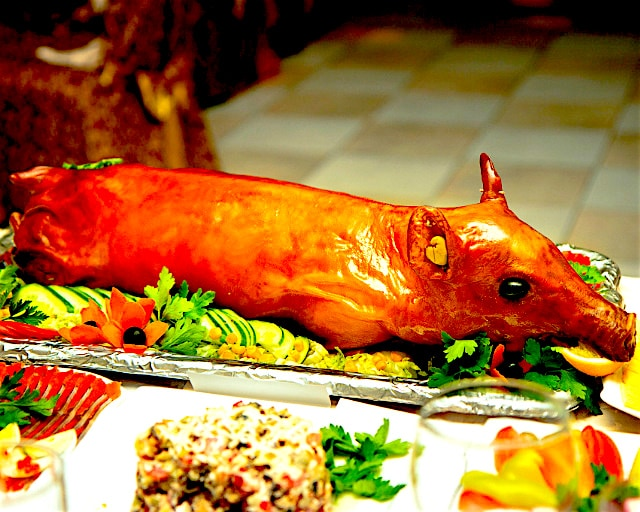
Typical price: Around IDR 25,000–80,000 per serving at selected eateries.
Babi guling is one of Bali’s most recognizable traditional dishes. It is made by seasoning a whole pig with a mixture of local spices before roasting it while turning it over a fire. The result is tender, aromatic pork with characteristically crisp skin.
A typical plate may include rice, roasted pork, crispy skin, lawar, and sambal. The combination of savory meat, crunchy skin, and spicy accompaniments makes it a substantial meal rather than simply a serving of roast pork.
Where to try it:
- Babi Guling Ibu Oka, Ubud: A well-known option near central Ubud. Indonesia Travel lists a published price range of IDR 30,000–80,000 per serving.
- Babi Guling Pak Malen, Seminyak: Another established option, with Indonesia Travel listing prices of around IDR 25,000–50,000 per serving.
- Warung Babi Guling Pande Egi, Gianyar: A traditional-style eatery serving babi guling and other Balinese dishes, with a published menu range of IDR 40,000–90,000 per portion.
Good to know: Babi guling contains pork and is not halal. If you avoid pork, try ayam betutu or a suitable fish-based dish instead.
2. Ayam Betutu: Slow-Cooked Spiced Chicken
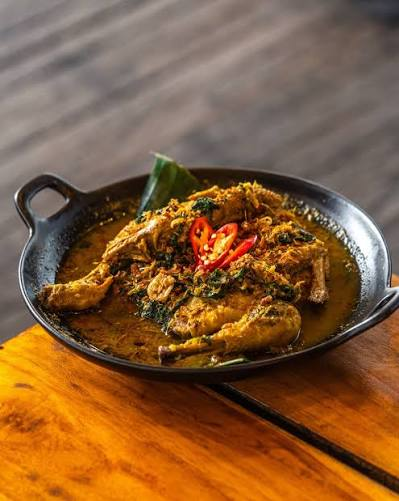
Typical price: Around IDR 15,000 and upward for selected budget portions; larger meals can cost considerably more.
Ayam betutu is chicken cooked with a fragrant Balinese spice mixture, often featuring shallots, garlic, turmeric, ginger, galangal, and chili. The chicken is seasoned thoroughly and cooked slowly until the meat becomes tender and absorbs the spices.
Some preparations wrap the chicken in banana leaves, while cooking techniques and seasoning blends vary between restaurants. The finished dish is aromatic and savory, with a level of heat that depends on the recipe.
Unlike grilled chicken seasoned mainly on the surface, betutu is valued for the flavor worked into the meat during preparation.
Where to try it:
- Ayam Betutu Khas Gilimanuk: A recognized name for this specialty, highlighted by Indonesia Travel as a place to try ayam betutu.
- Warung Liku, Denpasar: Known for ayam betutu and nasi campur. Indonesia Travel lists selected menu options starting at around IDR 15,000, depending on the item and portion.
Good to know: Ask how spicy the dish is before ordering. If you have a sensitive palate, request a milder version where available.
3. Sate Lilit: Minced Meat or Fish Satay

Typical price: Approximately IDR 30,000–60,000 for a serving at selected eateries.
Sate lilit is different from satay made with chunks of meat on thin skewers. The main ingredient is minced or ground meat or fish mixed with grated coconut and Balinese spices, then wrapped around a flat stick or lemongrass stalk before grilling.
The mixture creates a softer texture than conventional meat cubes, while grilling adds a smoky aroma. Lemongrass can contribute a subtle citrus fragrance, and the spice blend gives the satay its characteristic savory flavor.
Fish and chicken are common options, although recipes vary. Sate lilit may be served with rice, sambal matah, or other Balinese side dishes.
Where to try it:
- Sate Lilit Bali Karangasem: A name highlighted in Indonesia Travel’s Indonesian-language culinary guide.
- Balinese food stalls and warungs in Sanur: A practical area to look for grilled seafood and local satay, although availability varies by establishment.
Good to know: Confirm the protein before ordering. Sate lilit is not always made from fish, and some versions use chicken or pork.
4. Lawar: A Traditional Balinese Vegetable and Meat Mixture
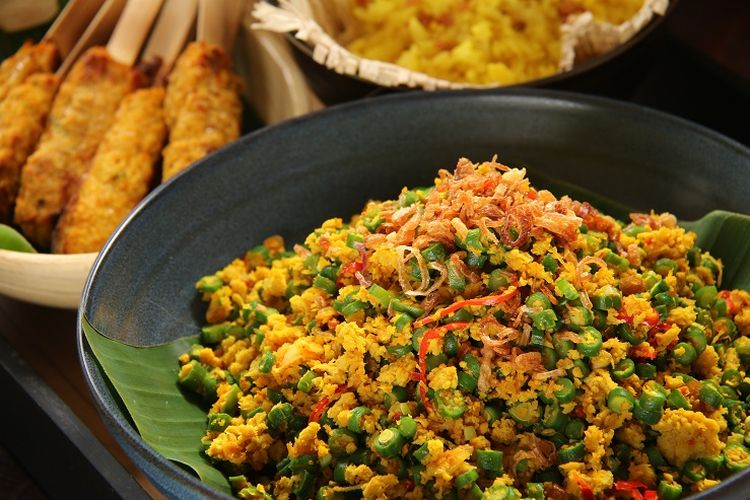
Typical price: Around IDR 25,000–50,000 as an indicative range for selected servings.
Lawar is a traditional Balinese preparation made by combining finely chopped ingredients, commonly vegetables, grated coconut, spices, and sometimes minced meat. It is often served alongside rice and other dishes, particularly in meals featuring babi guling.
There is no single universal lawar recipe. Different varieties use different ingredients, and some traditional versions include animal blood, while others do not. The seasoning may include aromatic herbs and spices that give the dish a distinctive savory flavor.
Lawar is also closely connected to Balinese communal and ceremonial food traditions, making it an interesting dish for visitors who want to understand more than the island’s best-known restaurant specialties.
Where to try it:
- Warung Babi Guling Pande Egi, Gianyar: Lawar is included among the restaurant’s published menu offerings.
- Local nasi campur and babi guling warungs: These are useful places to look for lawar served as part of a complete meal.
Good to know: Ask about the ingredients if you avoid meat or animal blood. Do not assume that every variety is vegetarian, even when vegetables are a prominent component.
You may also want to read this: 10 Best Romantic Dinner Places in Bali for a Sunset to Remember
5. Nasi Campur Bali: Rice with a Variety of Local Side Dishes
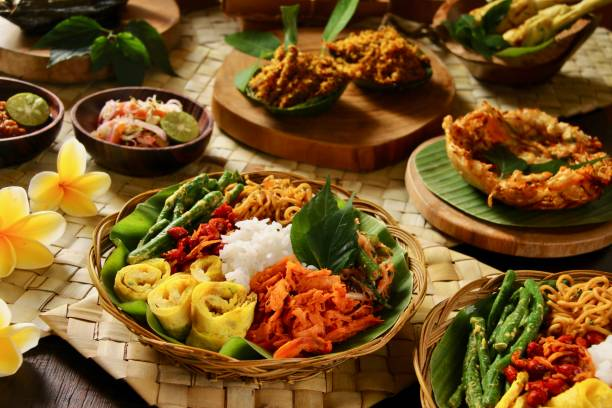
Typical price: Around IDR 30,000–50,000 at selected warungs; tourist-oriented restaurants may charge more.
Nasi campur Bali is a convenient way to try several local flavors in one meal. A serving starts with rice and includes a selection of side dishes, which may feature shredded chicken, sate lilit, seasoned vegetables, egg, sambal, or other local preparations.
The combination depends on the vendor. Some places let you choose from dishes displayed at the counter, while others serve a set combination. This means two plates of nasi campur can look quite different even when they are sold in the same area.
For first-time visitors, it is an easy introduction to Balinese food because you can sample different ingredients without ordering several separate dishes.
Where to try it:
- Warung Wardhani, Denpasar: Indonesia Travel lists nasi campur with a published price range of around IDR 30,000–45,000 per serving.
- Warung Liku, Denpasar: Another option known for nasi campur and ayam betutu.
- Warung Babi Guling Pande Egi, Gianyar: Offers nasi campur Bali among its published menu options.
Good to know: Ask which meats and side dishes are included, especially if you avoid pork, seafood, or particular ingredients.
6. Nasi Jinggo: A Small Rice Meal Wrapped in Banana Leaves

Typical price: Approximately IDR 5,000–10,000 for a small parcel at selected vendors.
Nasi jinggo is a compact rice meal traditionally wrapped in a banana leaf. It is particularly associated with casual eating and street food in Bali, making it a useful choice when you want something quick rather than a full restaurant meal.
A parcel commonly contains rice with small portions of accompaniments such as shredded chicken, noodles, sambal, or other side dishes. Ingredients differ between sellers, and the portions are generally small enough that some people buy more than one.
Nasi jinggo is especially worth looking for in Denpasar, where local vendors sell it as an affordable everyday meal and snack.
Where to try it:
- Nasi Jinggo Diponegoro, Denpasar: Listed by a culinary guide as a place to look for nasi jinggo.
- Street vendors and local food stalls around Denpasar: Availability often depends on the time of day, with some vendors operating in the evening.
Good to know: The low price usually reflects the small portion. Check the contents before buying if you have dietary restrictions or want to avoid particularly spicy sambal.
7. Tipat Cantok: Rice Cakes and Vegetables with Peanut Sauce

Typical price: Around IDR 8,000–15,000 at selected street-food stalls.
Tipat cantok combines rice cakes, vegetables, and a peanut-based sauce prepared with Balinese seasonings. The ingredients are mixed together before serving, creating a filling dish with a balance of soft rice cakes, fresh vegetables, and creamy sauce.
The word tipat refers to rice cakes, while cantok relates to grinding or pounding ingredients. This reflects the traditional preparation of the sauce, which can be ground together with chili and other seasonings.
Tipat cantok is a useful option if you want to explore a different side of Balinese food beyond meat-heavy specialties. However, the sauce and preparation vary, so the dish is not automatically suitable for every vegetarian or vegan diet.
Where to try it:
- Warung Dot Lalah: Listed in a culinary guide as a place to find tipat cantok.
- Warung De Rujak and Warung Men Runtu: Also identified as places to look for this dish.
Good to know: Ask whether the sauce contains shrimp paste or other animal-derived ingredients if you follow a vegetarian or vegan diet.
8. Nasi Tepeng: Gianyar’s Soft, Seasoned Rice Dish
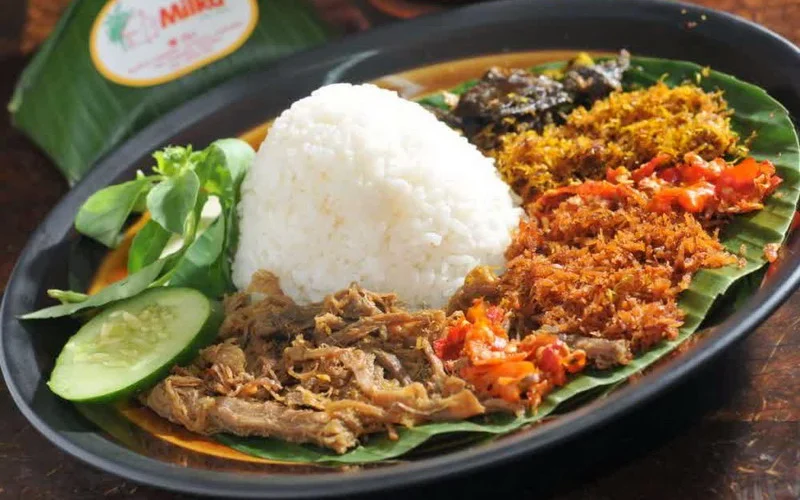
Typical price: Varies by vendor and portion; check the menu at the place you visit.
Nasi tepeng is a traditional rice dish associated with Gianyar. Its defining feature is its soft, moist consistency, closer to a thick rice porridge than a plate of separate steamed rice grains.
The rice is cooked with seasoning and commonly served with accompaniments such as vegetables, beans, eggplant, and chicken. The exact combination depends on the vendor.
Unlike nasi campur, where rice is generally served alongside separate portions, nasi tepeng is known for the texture of the rice itself and the way it is seasoned. It offers an interesting alternative for travelers exploring Gianyar’s local food scene.
Where to try it:
- Traditional food stalls in Gianyar: Look for nasi tepeng among local rice dishes and ask vendors whether it is available that day.
Good to know: Nasi tepeng is less consistently available than babi guling or nasi campur, so it is worth checking locally rather than expecting every restaurant to serve it.
You may also want to read this guide: Bali Coffee Plantation Experience: What to Expect & Where to Go
Tips for Finding and Enjoying Traditional Balinese Food
Knowing where to look and what to ask can make it easier to try local dishes while keeping your food budget under control.
- Budget for the type of meal you want. Small street-food portions may cost under IDR 15,000, while a full plate at a local warung often falls around IDR 30,000–60,000. Restaurant prices can be higher, especially in busy tourist areas. These are broad guides, not guaranteed prices.
- Look for local warungs. Small eateries often specialize in a few dishes rather than offering an extensive menu. A warung serving babi guling, for example, may be a better place to try that specialty than a restaurant with only a generic selection of Indonesian food.
- Ask what is included. Nasi campur, lawar, and sate lilit vary between vendors. A quick question about the ingredients helps you understand what you are ordering and avoid unwanted foods.
- Check the spice level. Chili is common in Balinese cooking, but not every dish is equally spicy. You can say tidak pedas to request food that is not spicy or sedikit pedas for a little spice. The kitchen may not be able to adjust every recipe.
- Carry some cash. Smaller food stalls may prefer cash, and payment methods vary by vendor. Keep smaller rupiah denominations handy for inexpensive meals.
- Check opening hours before making a special trip. Some food stalls specialize in one dish or sell out before closing. Verify current opening hours and prices directly, especially when visiting a specific restaurant.
- Be clear about dietary requirements. Pork, shrimp paste, and other animal-derived ingredients may appear in dishes or sauces where you do not immediately expect them. Ask the vendor directly rather than relying on the dish name alone.
Discover Bali’s Local Culture with Bali Island Vacations
Traditional Balinese food gives you a more personal way to experience the island, from a quick nasi jinggo parcel to a carefully prepared plate of babi guling or ayam betutu. Each dish reflects a different combination of ingredients, cooking techniques, and local food traditions.
As you plan your time in Bali, leave room to explore its local eateries alongside its temples, villages, landscapes, and coastal destinations. Bali Island Vacations can help you discover the island at a comfortable pace, with travel experiences shaped around the places and cultural details you want to explore.
The best food discoveries do not always come from ordering the most famous dish. Sometimes, they come from asking a local what they enjoy eating, trying a specialty you have never heard of, and taking the time to understand the flavors behind it.