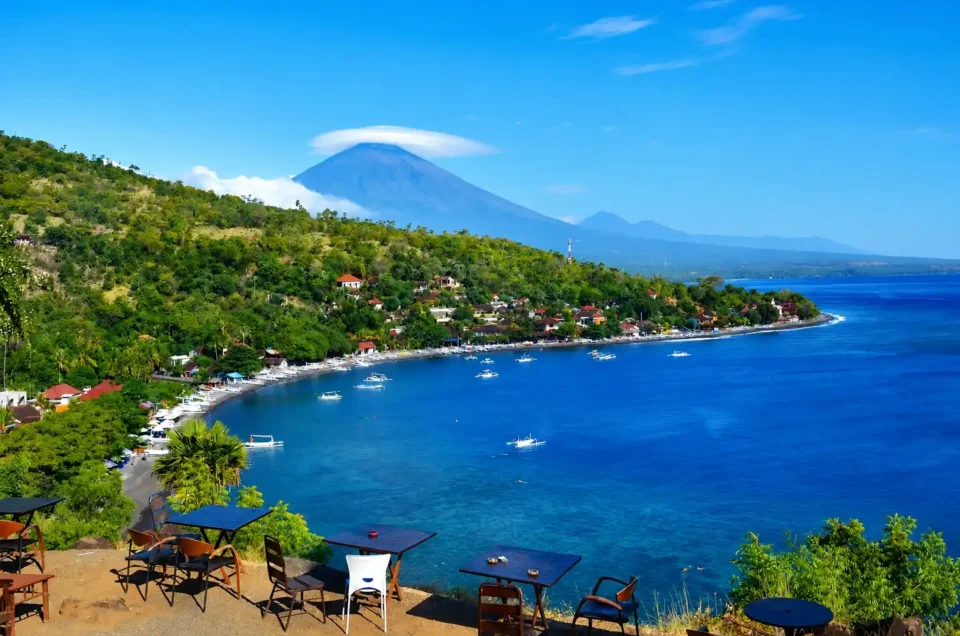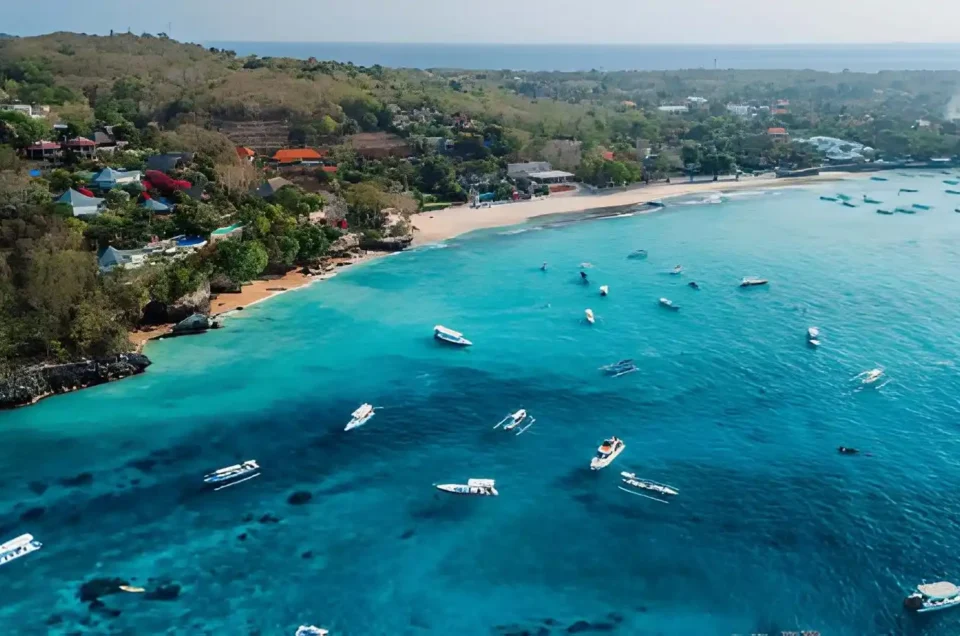
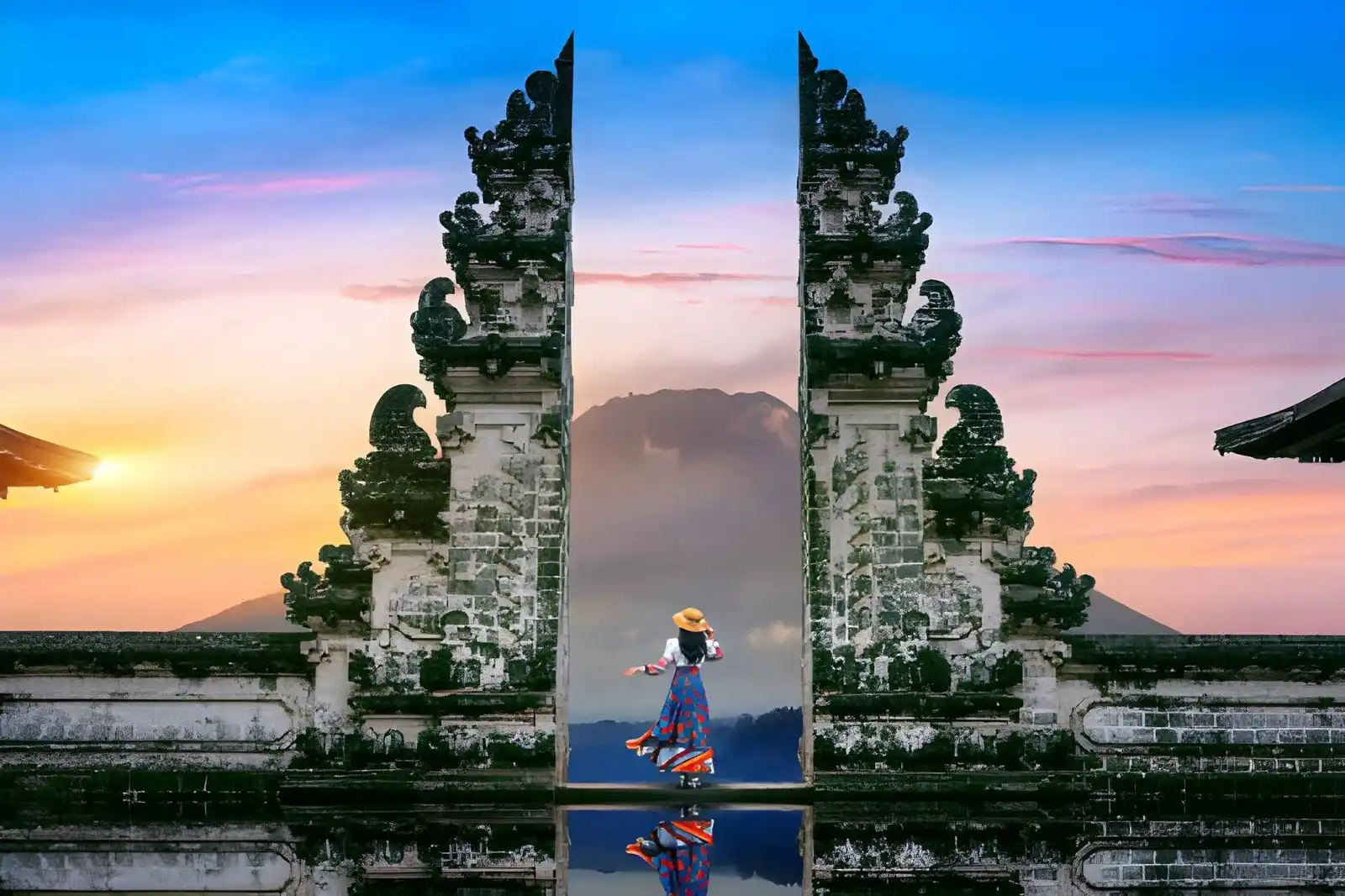
Lempuyang Temple is one of East Bali’s most distinctive cultural destinations, located on the slopes of sacred Mount Lempuyang in Karangasem. It is best known for the dramatic split gate called the Gates of Heaven, where Mount Aging can appear framed between the towering stone structures on a clear morning.
Beyond the famous photo, Lempuyang is a sacred complex of seven temples featuring Balinese architecture, mountain scenery, religious traditions, and a challenging stairway journey.
Whether you come for the Gates of Heaven, the Mount Aging panorama, or a deeper cultural experience, this guide covers what to see and expect when visiting Lempuyang Temple Bali.
Lempuyang Temple Bali at a Glance
| Location | Karangasem, East Bali |
| Known for | Gates of Heaven |
| Temple complex | Seven temples |
| Famous view | Mount Agung |
| Main temple/photo spot | Penataran Agung Lempuyang |
| Sacred significance | Part of Sad Kahyangan Jagad |
| Best time | Early morning for the clearest mountain views |
| Recommended time | Depends on whether you visit the lower temple or explore the wider complex |
What Is Lempuyang Temple Known For?
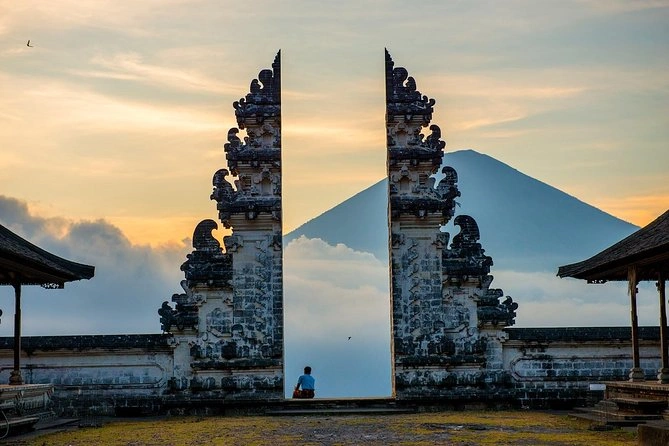
Lempuyang is known for three things that come together in one destination: the iconic Gates of Heaven, views toward Mount Aging, and its importance as a sacred temple complex in Balinese Hinduism.
The Gates of Heaven
The Gates of Heaven is the famous split gateway at Pura Penataran Aging Lempuyang, the lower temple in the Lempuyang complex.
Its appeal comes from the way the gateway frames the surrounding mountain landscape, particularly Mount Agung when visibility is good.
You can expect:
- A large split temple gate
- Mount Aging as the potential backdrop
- Traditional Balinese architectural details
- A popular photography area
- Queues during busy periods
- A very different experience depending on weather and mountain visibility
The important distinction is that the Gates of Heaven is an attraction within the Lempuyang temple complex, not the name of the entire temple complex.
Mount Aging View
One of Lempuyang’s strongest visual features is its position overlooking the landscape of East Bali, with Mount Aging providing the destination’s most recognizable backdrop.
On a clear morning, the mountain can appear directly between the two sides of the famous gate. Cloud and mist can change the view considerably, however, so seeing Mount Aging clearly is never something you should treat as guaranteed.
For the best chance of a clear mountain view:
- Arrive early
- Check the weather before leaving
- Allow flexibility in your itinerary
- Avoid planning the visit around the photograph alone
The relationship between the temple gate and Mount Aging is one of the reasons Lempuyang has become one of East Bali’s most recognizable landmarks.
Sacred Temple Complex
Behind the famous gateway is a much larger religious landscape.
Pura Lempuyang Luhur is a complex of seven temples distributed along the slopes and trail leading toward the summit of Mount Lempuyang. The journey to the highest temple involves around 1,700 steps and can take roughly 1.5–2 hours one way depending on your pace and physical condition.
The wider complex includes:
- Pura Penataran Aging Lempuyang at the lower section
- Pura Telaga Mas
- Pura Telaga Sawangan
- Pura Lempuyang Madya
- Pura Puncak Bisbis
- Pura Pasar Aging
- Pura Lempuyang Luhur near the summit
This means your experience can be as simple as visiting the lower temple and famous gate, or much more demanding if you choose to continue along the sacred trail.
Lempuyang is also recognized as one of the Sad Kahyangan Jagad, a group of six major sacred temples considered important within Bali’s Hindu religious landscape.
Because this remains an active sacred site, the temple should be approached as a place of worship first and a tourist attraction second.
Things to Do at Lempuyang Temple
Here are the main ways to experience Lempuyang beyond simply taking a photo at the gate.
1. See the Gates of Heaven
The split gate at Pura Penataran Aging Lempuyang is the most recognizable part of the destination and the main reason many people include Lempuyang in their Bali itinerary.
Take time to appreciate the architecture and mountain setting rather than treating the gate as a quick photo stop.
- See the iconic split gate
- Take photos with Mount Aging when visibility is good
- Expect a queue during busy periods
- Follow the local photography and temple rules
The famous reflection effect seen in many Lempuyang photos is created using a mirror rather than a natural pool beneath the gate.
3. Enjoy the Mount Aging View
Mount Aging is one of the most important visual elements of the Lempuyang experience. On a clear morning, the volcano can appear directly between the two sides of the gate.
Your view will depend heavily on weather and cloud conditions, so avoid treating a clear Mount Aging panorama as guaranteed.
For the best chance of seeing the mountain:
- Arrive early
- Check the weather before leaving
- Allow some flexibility in your schedule
- Be prepared for clouds or mist to change the view
4. Explore the Temple Grounds
The lower temple offers more than the famous gate. Take time to look around the temple grounds and appreciate the traditional architecture, stone carvings, courtyards, and religious spaces.
Because Lempuyang is an active place of worship, some areas may be used for ceremonies or prayer. Follow signs, local instructions, and access restrictions rather than assuming every area is open for exploration.
5. Walk Part of the Sacred Trail
You do not necessarily have to reach the summit to experience the wider Lempuyang complex.
Walking beyond the lower temple gives you a different perspective of the destination, with forested sections, stairs, smaller temple areas, and mountain surroundings along the route.
This option works well if you want more than the Gates of Heaven but do not want to commit to the full climb.
6. Continue to the Upper Temples
For a more demanding experience, you can continue along the sacred route toward the upper temples and eventually Pura Lempuyang Luhur.
The full journey involves around 1,700 steps and can take roughly 1.5–2 hours to reach the upper temple, depending on your pace and physical condition. The wider complex contains seven temples spread across the slopes of Mount Lempuyang.
Choose the full route if you:
- Have enough time
- Are comfortable with a long stair climb
- Want to experience more of the temple complex
- Prefer a deeper cultural and spiritual experience over a quick photo stop
7. Experience the Spiritual Atmosphere
Lempuyang is an important sacred site for Balinese Hindus, so its atmosphere is very different from a conventional sightseeing attraction.
You may see people praying, making offerings, or taking part in religious activities during your visit. The best way to experience this side of Lempuyang is simply to slow down and observe respectfully.
Remember that the temple remains a place of worship:
- Dress appropriately
- Keep your voice low
- Follow temple rules
- Do not disturb ceremonies
- Ask before photographing people during religious activities
Best Time to Visit Lempuyang Temple
Best Time of Day
Early morning is the best all round option.
Starting early gives you a better chance of seeing Mount Aging before clouds build up and lets you experience the temple before the day becomes hotter and busier.
| Time | Best for |
|---|---|
| Early morning | Mount Agung views, photography, cooler conditions |
| Morning | Temple visit and sightseeing |
| Midday | Less ideal for heat and mountain visibility |
| Late afternoon | Alternative timing, but mountain visibility can vary |
If you are planning the longer stair route, an early start is even more useful because you have more time to complete the journey without rushing.
Best Time for Mount Aging Views
If Mount Aging is your main reason for visiting, go as early as practical.
The famous view through the Gates of Heaven depends on visibility, and clouds or mist can obscure the mountain later in the day. Indonesia Travel specifically recommends a morning visit when the weather is clear for better Mount Aging visibility.
For the best odds:
- Choose a morning with favorable weather
- Arrive before the main crowds
- Check the mountain forecast where possible
- Keep expectations flexible
Even with perfect planning, mountain visibility can change quickly.
Best Time to Avoid Long Queues
There is no guaranteed queue free period, particularly during busy travel dates. However, arriving early is one of the most practical ways to reduce your waiting time.
We recommends you to arrive before around 07:00 WITA to help avoid queues, especially around the famous gate.
If the photo is your priority, consider:
Arrive early → complete the gate experience → explore the temple grounds → continue to other East Bali destinations.
This is generally more efficient than arriving late and building your entire itinerary around an uncertain waiting time.
Best Months to Visit
Lempuyang can be visited throughout the year, but weather matters because both the Mount Aging view and the outdoor stair route are affected by conditions.
The dry season, roughly April to October, generally offers more favorable conditions for outdoor sightseeing, although weather and mountain visibility can still change from day to day.
| Period | What to consider |
|---|---|
| April–October | Generally more suitable for outdoor sightseeing |
| November–March | Higher chance of rain and changing weather |
| Transition months | Conditions can vary; check the forecast |
Rather than choosing a month based only on the season, check the weather close to your visit if seeing Mount Aging is a priority.
Sunrise at Lempuyang
Sunrise is one of the strongest reasons to start your Lempuyang visit early. The temple’s elevated position and east-facing setting make the early morning particularly rewarding, especially when the sky is clear and Mount Aging is visible.
For a sunrise focused visit:
- Arrive before the light begins to change
- Allow time for parking and reaching the temple area
- Bring a light layer because the higher elevation can feel cooler
- Do not rush the experience purely for a photograph
- Consider continuing with breakfast and other East Bali destinations afterward
Lempuyang Temple Entrance Fee & Opening Hours
Before heading to Lempuyang Temple, it helps to understand how the visit actually works. The entrance fee is only one part of the cost, as you may also need to pay for parking and the shuttle from the parking area to the temple.
Entrance Fee
Current information from Indonesia Travel lists the following rates for Lempuyang Temple:
| Item | Rate |
|---|---|
| International entrance | IDR 100,000 per person |
| Domestic entrance | IDR 50,000 per person |
| Car parking | IDR 10,000 |
| Motorcycle parking | IDR 5,000 |
| Shuttle service | Around IDR 50,000 per person |
These rates are useful for planning your budget, but local fees can change, so check the latest rate when you arrive.
The entrance fee should also be considered separately from your transportation costs. If you are coming from southern Bali, your overall budget will depend heavily on whether you use a private driver, rental vehicle, or organized tour.
The shuttle is particularly convenient if you are visiting for the lower temple and Gates of Heaven. However, it does not remove the physical effort involved if you decide to continue toward the upper temples. The route to Lempuyang Luhur still involves the long stairway journey up Mount Lempuyang.
Opening Hours
Lempuyang Temple is generally open for public visits from 07:00 to 17:00 WITA.
For a sightseeing visit, arriving around opening time is a practical choice, especially if you want to:
- Reach the Gates of Heaven before the busiest period
- Have a better chance of seeing Mount Aging clearly
- Avoid the strongest midday heat
- Leave enough time if you want to explore beyond the lower temple
Lempuyang Temple Dress Code & Etiquette
Lempuyang Temple is an active Balinese Hindu temple, not simply a viewpoint with a famous photo spot. The Gates of Heaven is located inside Pura Penataran Aging Lempuyang, so normal temple etiquette applies even if your main reason for coming is the photograph.
What Should You Wear?
Dress modestly when entering the temple complex.
A practical outfit includes:
- A shirt or top that covers your shoulders
- Trousers, long pants, or a long skirt
- Comfortable footwear
- Clothing that is easy to walk in if you plan to explore the upper temple route
Avoid very short bottoms, revealing clothing, or outfits that are unsuitable for entering a sacred site.
If you are visiting early in the morning, bringing a light layer can also be useful because Lempuyang sits at a higher elevation than Bali’s southern beach areas.
Sarong and Sash
A sarong and sash are part of the required temple attire.
The sarong covers your legs, while the sash is tied around your waist. You may be provided with or directed to obtain appropriate temple attire at the entrance.
Wear the sarong properly before entering the sacred areas rather than treating it as something only needed for photographs.
If you plan to climb toward the upper temples, comfortable clothing underneath the sarong will make the longer journey easier.
Temple Etiquette
The most important thing to remember at Lempuyang is that religious activities take priority over sightseeing.
While inside the complex:
- Speak quietly
- Follow instructions from temple staff
- Stay within areas accessible to you
- Do not climb on temple gates, walls, or shrines
- Do not step on offerings
- Give people who are praying enough space
- Do not sit on sacred structures
- Move aside when religious processions need to pass
You may see canang sari, daily Balinese Hindu offerings, placed around the temple grounds. Do not step over or onto them simply to get a better photography angle.
When you are unsure whether an area is accessible, ask a member of the temple staff instead of assuming.
Photography Rules
Photography is allowed in appropriate areas, but the famous Gates of Heaven photo should not be confused with unrestricted access to the temple.
For a respectful visit:
- Follow the designated photo queue
- Do not climb the Gates of Heaven
- Do not enter restricted areas for a better angle
- Do not interrupt people who are praying
- Ask before taking close-up photographs of worshippers
- Follow staff instructions during ceremonies
The famous Gates of Heaven photograph is also a quick, organized experience rather than a long personal photoshoot. If you want more time for architectural details, carvings, or the surrounding landscape, move away from the main queue once your turn is finished.
Respecting Worshippers and Ceremonies
You may encounter worshippers praying, making offerings, or participating in ceremonies during your visit.
When this happens, give them priority.
That can mean:
- Waiting before taking a photograph
- Moving to another part of the temple
- Keeping your voice down
- Avoiding walking through a religious procession
- Following temporary access restrictions
Some areas may also become temporarily unavailable during ceremonies. This is normal for an active temple and is one reason you should avoid planning your Lempuyang visit around a rigid photography schedule.
The simplest rule is: Let the religious activity come first.
Once you approach Lempuyang this way, the visit becomes more than waiting for a photograph at the Gates of Heaven. You get to experience the architecture, mountain setting, and religious atmosphere while respecting the people who come here to worship.
Conclusions: So, Is Lempuyang Temple Worth Visiting?
Lempuyang Temple is worth visiting if you want the famous Gates of Heaven photo, Mount Agung views, and the experience of visiting an active Balinese Hindu temple. It is less worthwhile if you dislike queues, early starts, shuttle transfers, or destinations that can feel crowded and highly focused on photography.
For the best experience, arrive early, wear appropriate temple clothing, allow extra time for the shuttle and photo queue, and keep your schedule flexible around ceremonies and weather.
If you are already exploring East Bali, Lempuyang is a worthwhile stop, and it can be a memorable addition to a Bali Island Vacations itinerary, but approach it as a sacred temple first and a photography destination second.