
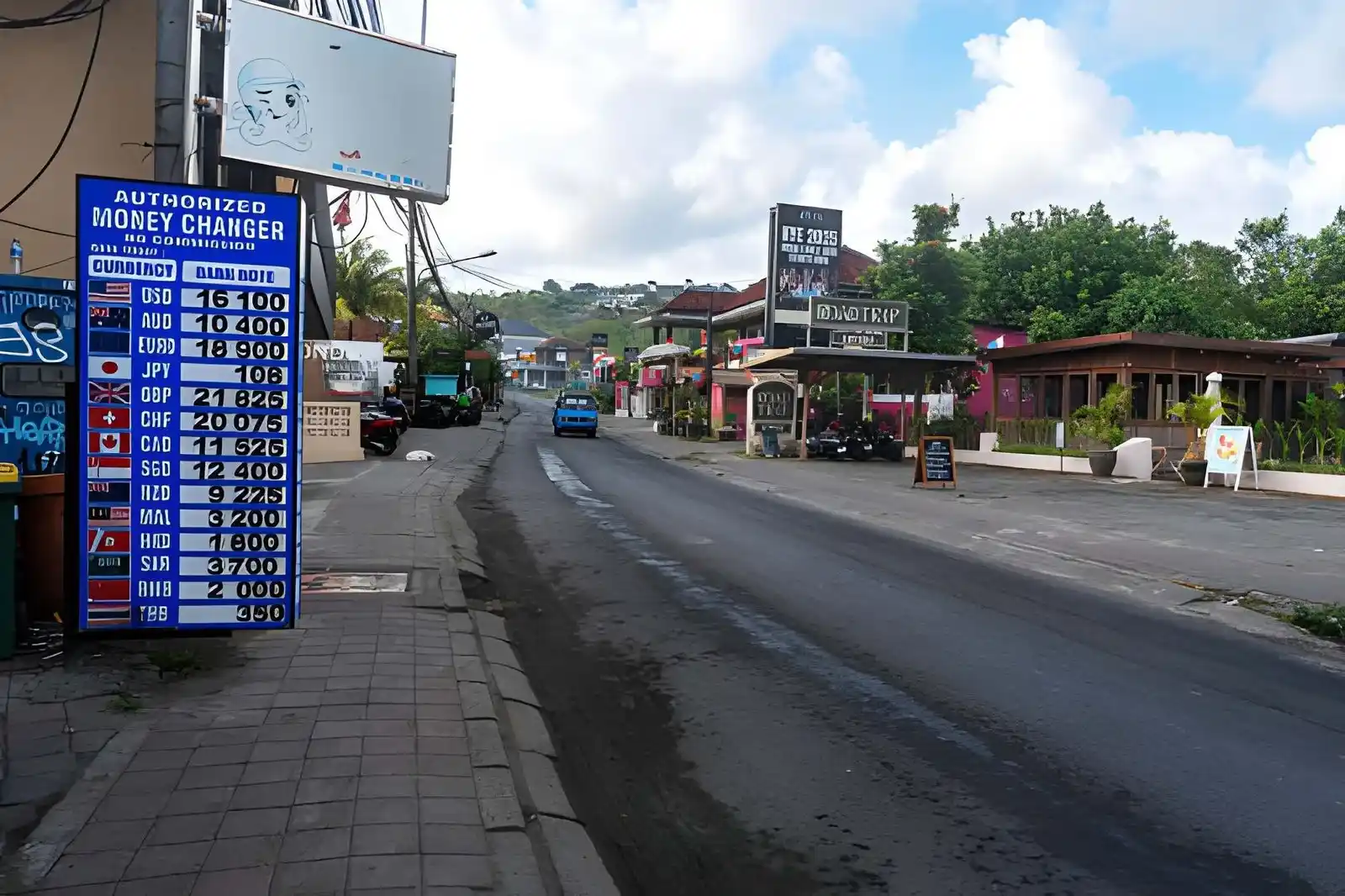
If you’re visiting Bali, you’ll quickly notice that having some Indonesian Rupiah (IDR) is still useful even though cards and digital payments are widely accepted in many tourist areas. Small restaurants, local shops, markets, parking areas, and businesses outside the main tourist zones may still prefer cash.
The challenge is knowing where to exchange your money, how to judge whether a rate is actually good, and how to avoid losing money through fees or dishonest exchange practices.
Here’s what you should know about exchanging money in Bali before and during your trip.
What Currency Do You Use in Bali?
The official currency of Bali, like the rest of Indonesia, is the Indonesian Rupiah (IDR), usually written as Rp.
For international visitors, the practical point is simple:
- Keep some IDR cash available for small purchases.
- Cards are useful at hotels, larger restaurants, and established businesses.
- Digital payment options are increasingly available in tourist areas.
- Do not assume every small business will accept your foreign currency or card.
So even if you prefer paying by card, having some Rupiah available makes getting around Bali easier.
Where Should You Exchange Money in Bali?
You generally have three practical ways to access Rupiah: licensed money changers, ATMs, and banks.
1. Licensed Money Changers
Money changers are particularly convenient if you arrive with foreign cash and want to exchange it into IDR.
Before exchanging:
- Compare rates at more than one location.
- Check whether a commission is charged.
- Confirm the exact amount you will receive.
- Count the money yourself before leaving the counter.
Don’t choose a money changer simply because its advertised rate is the highest. The final amount you receive matters more than the headline number.
2. ATMs
ATMs are useful if you prefer withdrawing Rupiah directly from your bank account.
Check for possible costs from both sides:
- Indonesian ATM fees
- Your home bank’s international withdrawal fee
- Foreign-exchange or conversion charges
- Daily withdrawal limits
Using an ATM operated by a reputable bank and located in a secure place is generally more practical than relying on unfamiliar standalone machines.
3. Banks
Banks can also provide currency exchange services, although they may be less convenient than a money changer for a quick tourist transaction.
For most trips, a combination of cash, cards, and ATM access gives you the most flexibility.
Money Changer Locations in Bali
If you prefer exchanging foreign cash rather than withdrawing IDR from an ATM, the easiest approach is to use an established money changer in the area where you’re already staying.
One example is Central Kuta Money Exchange, which operates multiple outlets across major tourist areas including Kuta, Seminyak, Canggu, Jimbaran, Nusa Dua, Sanur, and Ubud. Its official outlet directory is useful because locations and operating hours can change.
1. Seminyak
Seminyak has several Central Kuta locations, including:
- Central Kuta Money Exchange – Oberoi, on Jalan Kayu Aya
- Central Kuta Money Exchange – Seminyak Square, inside Seminyak Square
- Central Kuta Money Exchange – Head Office, on Jalan Sunset Road
The official listing currently shows the Oberoi outlet operating around 08:30–21:00 and the Seminyak Square outlet around 09:20–21:00, although operating hours can change.
This makes Seminyak particularly convenient if you’re already staying around Seminyak, Petitenget, or Kerobokan.
2. Kuta & Legian
For stays around Kuta, there are Central Kuta outlets around:
- Kartika Plaza
- Kuta Square
- Raya Kuta
- Legian
- Melasti Legian
For example, the official directory currently lists the Kuta Square and Raya Kuta outlets at around 09:00–21:00 and the Kartika Plaza outlet until around 00:30.
Rather than travelling across Bali just to find a money changer, it usually makes more sense to use a reputable outlet close to your accommodation.
3. Canggu and Other Tourist Areas
Central Kuta also lists outlets in areas such as Canggu Berawa, Pererenan, Jimbaran, Nusa Dua, Sanur, and Ubud.
The wider Bali market also has many authorized money changers. The authorized money changer directory currently lists hundreds of licensed operators across Bali, so you do not necessarily need to rely on one particular chain.
Practical rule: choose a reputable, clearly established exchange service near where you are staying, then compare its rate with another nearby option before exchanging a larger amount.
You may also want to read this: Cash or Card in Bali? Payments, ATMs, Fees & QRIS Guide
How to Get a Better Exchange Rate in Bali
A good exchange rate is only useful if the transaction itself is transparent.
Compare the Actual Rate
Before handing over your money, compare the displayed rate with another reputable exchange service or a reliable current exchange-rate reference.
Pay attention to:
- Currency being exchanged
- Buy or sell rate
- Displayed rate
- Commission or service fee
- Final amount you will receive
A rate that looks unusually attractive deserves extra attention rather than an immediate transaction.
Check the Final Amount
Ask the staff to show you how much Rupiah you will receive before completing the exchange.
Then:
- Confirm the calculation.
- Count the IDR yourself.
- Check the denominations.
- Keep your receipt.
- Leave only after confirming the amount.
Central Kuta itself states that its published rates are indicative and can change without prior notice, which is a useful reminder that online or displayed rates should not automatically be treated as the final rate at the counter.
How to Avoid Money Exchange Scams in Bali
The biggest red flag is not simply a poor exchange rate. It is a transaction where the final amount does not match what you expected.
Be cautious when you encounter:
- Rates that appear significantly better than nearby alternatives
- Unclear commissions or fees
- Staff rushing you through the transaction
- Money being counted repeatedly or moved away from your view
- Distractions while cash is being counted
- Pressure to complete the transaction immediately
A simple habit can reduce your risk considerably:
Count your money yourself at the counter before putting it away.
If anything about the transaction feels unclear, you can stop and leave. You are not required to exchange money simply because you have already entered the shop.
You may also want to read this: 10 Bali Scams to Avoid: Stay Safe & Travel With Confidence
Should You Bring Cash or Use Cards in Bali?
For most trips, using both cash and cards is the most practical approach.
| Payment Method | Useful For | Keep in Mind |
|---|---|---|
| IDR cash | Markets, small shops, parking, local businesses | Carry only what you need |
| Credit card | Hotels, restaurants, larger businesses | Foreign transaction fees may apply |
| Debit card | ATM withdrawals | Check withdrawal and FX fees |
| Digital payment | Participating merchants | Availability varies |
International visitors can also use QRIS Cross-Border when their payment provider supports it. Bank Indonesia states that participating international users can make QRIS payments while the transaction is converted into their home currency.
Still, digital payment should complement rather than completely replace your cash and card backup.
Bali Currency Exchange Tips for First-Time Visitors
You don’t need to exchange your entire holiday budget as soon as you arrive. A better approach is to keep your payment options flexible.
Before flying:
- Bring a small amount of emergency cash.
- Check your bank’s international withdrawal and transaction fees.
- Have at least one backup card.
- Check the current exchange rate before travelling.
During your Bali trip:
- Exchange money through reputable providers.
- Compare rates before larger transactions.
- Avoid carrying unnecessary amounts of cash.
- Count your Rupiah before leaving the counter.
- Keep some cash available for smaller local purchases.
Also remember that the Bali tourist levy is separate from your currency exchange budget. The current levy for international tourists is Rp150,000 and is paid electronically through the Love Bali system or designated payment facilities.
How Much Cash Should You Exchange in Bali?
There is no single amount that every visitor needs because daily spending varies considerably.
Instead of exchanging your entire travel budget, start with enough cash for immediate needs such as:
- Local meals
- Parking
- Small shops
- Markets
- Tips
- Entrance fees
- Local transport
You can then exchange or withdraw more when needed.
This approach also reduces the amount of cash you need to carry and means you are not forced to convert a large amount of leftover Rupiah back into your home currency at the end of the trip.
You may also want to read this: Bali Travel Cost Breakdown in 2026: What You Actually Spend
Final Tips for Exchanging Money in Bali
The safest approach is simple: compare rates, check fees, use reputable exchange services, and always count your money yourself.
You do not need to carry your entire travel budget in cash. Keeping a sensible amount of Rupiah alongside a card and reliable ATM access gives you flexibility without unnecessary risk.
Once the practical side is sorted, Bali Island Vacations can help you plan the rest of your Bali experience, from choosing destinations to arranging transport between different parts of the island.
For more practical planning tips, explore our related Bali travel guides below:
- Bali SIM Card & eSIM: Prices, Best Networks & How to Stay Connected
- Bali Travel Checklist: 15 Essentials Before You Go
- Bali Tourist Tax 2026: Cost, Payment & Latest Update