
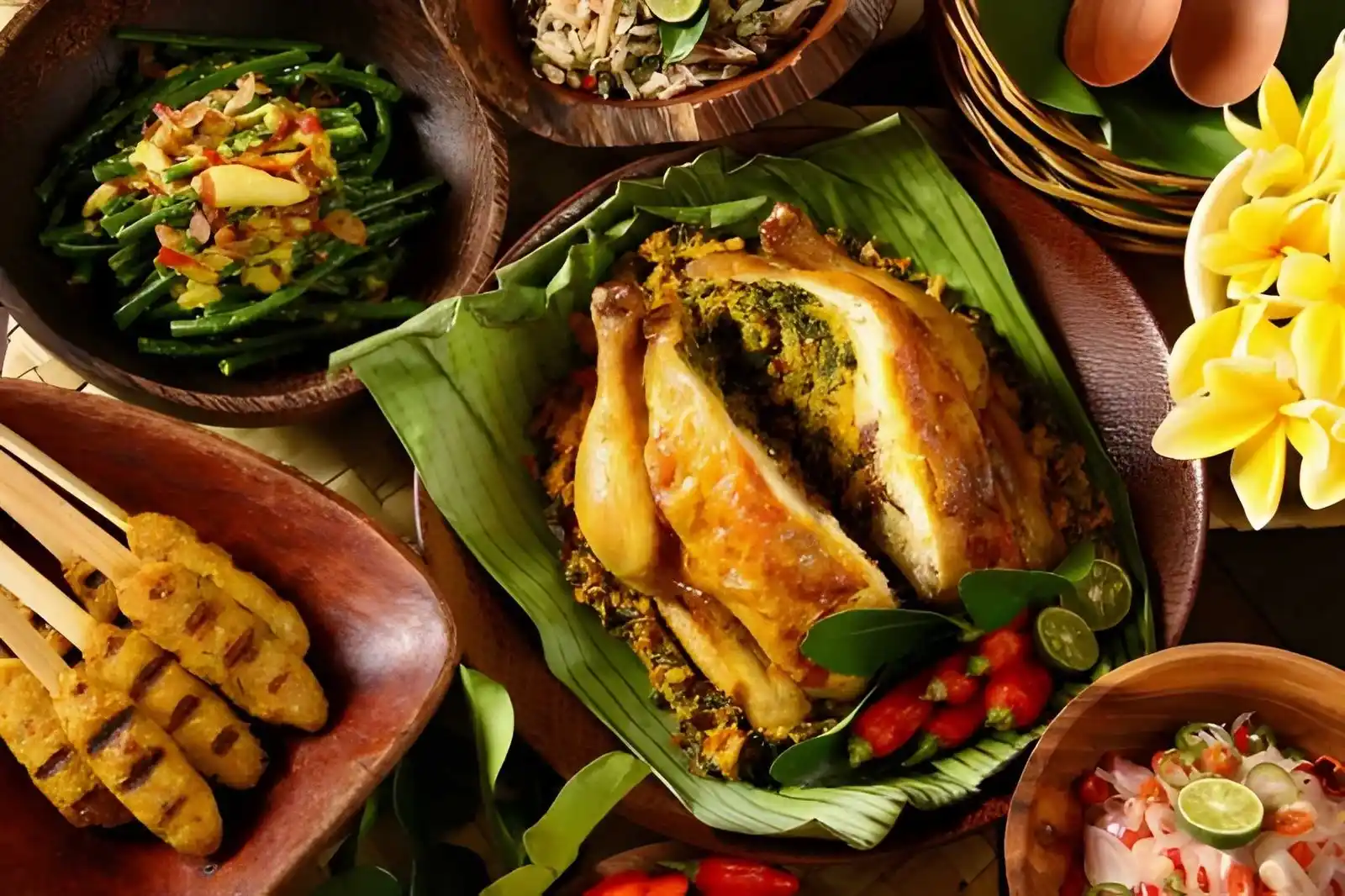
Trying food in Bali isn’t just about eating, it’s part of how you experience the island itself. The flavors are bold, often layered with spices, and each dish reflects a mix of local tradition and daily life. From slow-cooked specialties to simple meals served in small local eateries, the variety is what makes it memorable.
What makes it even more interesting is how different each dish feels. Some are rich and intense, others are simple but deeply satisfying, and a few are best discovered when you’re not even actively looking for them. If you’re wondering what to actually try while you’re here, here’s where to start.
Must-Try Dishes in Bali You Should Experience
Across Bali, food isn’t served in isolation, it’s usually part of a combination of textures, spices, and side dishes that come together on one plate.
Some meals are built for everyday eating, while others are more ceremonial or slow-prepared. Here are the core dishes that define the experience.
Babi Guling
Babi Guling is one of the most iconic dishes you’ll come across in Bali, and it’s often the first thing people recommend trying. Traditionally, a whole pig is seasoned with a blend of turmeric, coriander, lemongrass, garlic, and other local spices, then slow-roasted over an open fire. The process gives you two distinct textures in one serving: crispy, crackling skin and tender, flavorful meat underneath.
What makes it stand out isn’t just the roasting technique, but how it’s served. A typical plate includes rice, pieces of pork from different cuts, crispy skin, vegetables like lawar, and a spicy sambal that ties everything together. Each bite feels layered rather than repetitive.
To understand why it’s so popular:
- flavor profile: rich, savory, and slightly spicy with aromatic herbs
- texture: contrast between crispy skin and soft meat
- best moment to try: lunch, when most traditional spots serve it fresh
Nasi Campur Bali
Nasi Campur is one of the easiest ways to experience multiple flavors at once, especially if it’s your first time trying Balinese food. Instead of focusing on one main dish, you get a plate of rice surrounded by small portions of different toppings, each prepared with its own seasoning and cooking method.
The combination can include spicy chicken, shredded pork, eggs, vegetables, peanuts, and sambal. What makes it interesting is that no two plates are exactly the same. Each warung or local eatery has its own version, so the experience can change depending on where you go.
It works well when you want variety without overthinking what to order:
- flavor profile: mixed, ranging from savory to spicy in one plate
- experience: balanced and flexible, good introduction to local cuisine
- best moment to try: anytime during the day, especially for a quick but satisfying meal
Bebek Betutu
Bebek Betutu is a dish that takes time, and you can taste that in every bite. The duck is marinated with a rich blend of spices, wrapped in banana leaves, and then slow-cooked for hours, sometimes even overnight. This process allows the flavors to fully absorb into the meat while making it extremely tender.
Compared to quicker dishes, this one feels deeper and more intense. The spices are not just on the surface—they’re infused throughout the entire dish. It’s often served as a more complete meal rather than a quick stop, making it a good choice when you’re ready to sit down and take your time.
Here’s what defines the experience:
- flavor profile: deep, aromatic, and slightly spicy
- texture: very tender, almost falling apart
- best moment to try: lunch or dinner when you have time to enjoy it slowly
Sate Lilit
Sate Lilit stands out immediately because it looks different from typical satay. Instead of chunks of meat on skewers, it uses minced meat, often fish, chicken, or pork, mixed with grated coconut and spices, then wrapped around a stick of lemongrass.
That lemongrass isn’t just for presentation. As the meat cooks, it releases a subtle citrus aroma that blends into the flavor. The texture is softer and more uniform compared to regular satay, making it easier to eat and slightly more delicate in taste.
It’s usually served as part of a larger meal, but it’s also memorable on its own:
- flavor profile: savory with a light, aromatic citrus note
- texture: soft and slightly juicy
- best moment to try: as part of a mixed meal or alongside rice dishes
Street Food & Local Bites You Shouldn’t Miss
Not all great food in Bali comes from full meals or well-known dishes. Some of the most memorable flavors show up in smaller portions, often served quickly and found in simple local spots. These are the kinds of foods you can try in between activities or while exploring different areas.
Nasi Jinggo
Nasi Jinggo might look simple at first, but it’s one of the most local everyday foods you’ll come across. It’s a small portion of rice wrapped in banana leaves, usually filled with a mix of shredded chicken, sambal, noodles, and sometimes tempeh or egg.
Because of its size, it’s not meant to be a full meal, it’s more of a quick bite. But that’s exactly what makes it interesting. It gives you a compact version of Balinese flavors in just a few bites, often slightly spicy and surprisingly satisfying.
To give you a clearer feel:
- flavor profile: savory with a noticeable spicy kick
- portion size: small, snack-style
- best moment to try: late evening or when you want something quick and local
Bakso
Bakso is one of those comfort foods that feels familiar even if it’s your first time trying it. It’s a bowl of meatball soup, usually served with noodles, tofu, and a light but flavorful broth.
You’ll find it almost everywhere, from street carts to small eateries, and it’s especially popular because it’s simple, warm, and easy to enjoy. The broth is usually mild, but you can adjust the taste with chili sauce, soy sauce, or vinegar depending on your preference.
Here’s what to expect:
- flavor profile: mild, savory, and comforting
- experience: warm, easy-to-eat, and customizable
- best moment to try: lunch or anytime you want something light but filling
Martabak
Martabak is one of the most indulgent street foods you’ll find in Bali, and it comes in two very different styles. The sweet version is thick, soft, and filled with toppings like chocolate, cheese, peanuts, or condensed milk. The savory version, on the other hand, is filled with egg, meat, and spices, then pan-fried until crispy.
The sweet one tends to be more popular with visitors, especially because it feels more like a dessert than a snack. It’s rich, slightly heavy, and usually shared.
To help you picture it:
- flavor profile: sweet and rich (or savory and slightly spiced)
- texture: soft inside with a slightly crispy edge
- best moment to try: evening, as a dessert or shared snack
Rujak Kuah Pindang
Rujak Kuah Pindang is one of the more unique flavors you’ll come across. It’s a fruit salad, but instead of a sweet dressing, it’s mixed with a savory, slightly salty broth made from fish stock, combined with chili and other spices.
The result is a mix of sweet, sour, spicy, and salty in one bite. It’s not for everyone, but if you’re open to trying something different, it’s one of the most distinctive local flavors you can experience.
Here’s how it stands out:
- flavor profile: complex, sweet, tangy, spicy, and savory
- experience: bold and unusual compared to typical fruit dishes
- best moment to try: midday or when you want something refreshing but different
Traditional Sweets & Drinks to Try in Bali
Beyond savory dishes, Bali also has a range of traditional sweets and drinks that are often lighter but just as memorable. These are usually enjoyed as snacks or something refreshing during the day.
Jajanan Pasar
Jajanan Pasar refers to a variety of traditional market snacks, often made from rice flour, coconut, and palm sugar. You’ll see different shapes, colors, and textures, from soft cakes to sticky rice-based treats.
They’re usually not overly sweet, which makes them easier to enjoy even if you’re not used to sugary desserts. Each one has a slightly different texture, some are chewy, others soft or slightly dense.
To understand the experience:
- flavor profile: lightly sweet with coconut notes
- texture: varies from soft to slightly chewy
- best moment to try: morning or as a light afternoon snack
Es Daluman
Es Daluman is one of the most refreshing drinks you can have in Bali, especially in warm weather. It’s made with green jelly (daluman), coconut milk, palm sugar syrup, and ice.
The combination creates a balance between creamy and refreshing, with a subtle sweetness that doesn’t feel too heavy. It’s simple, but it works extremely well after spending time outdoors.
Here’s what makes it worth trying:
- flavor profile: lightly sweet, creamy, and refreshing
- texture: soft jelly with a smooth drink base
- best moment to try: midday, when the weather feels hottest
Balinese Coffee
Coffee in Bali is more than just a drink, it’s part of the daily routine. Locally grown beans are often brewed in a simple way, resulting in a strong, slightly earthy flavor.
Whether you try it in a small local spot or a more modern cafe, it gives you a different perspective compared to typical coffee experiences. It’s less about presentation and more about the taste itself.
To help you decide:
- flavor profile: strong, slightly earthy, sometimes bold
- experience: simple, local, and authentic
- best moment to try: morning or as a slow break during the day
Experience Bali Through Its Local Food
Exploring food in Bali gives you a different way to understand the island, through flavors, cooking traditions, and everyday local habits. When you know what to try and where to find it, even a simple meal can turn into one of the most memorable parts of your trip.
With Bali Island Vacations, you can experience these local dishes in a way that feels easy, well-paced, and naturally connected to the places you visit.
To explore more unique experiences across Bali, continue reading these related travel guides below.
- 7 Best Ubud Cafes with Rice Field Views for a Relaxing Break
- 10+ Unique Cultural Experiences in Bali You Can Truly Feel
FAQs About Food to Try in Bali
What food is Bali famous for?
Bali is best known for dishes like Babi Guling, Nasi Campur Bali, Bebek Betutu, and Sate Lilit, all known for their rich spices and traditional cooking methods.
What should you eat in Bali for the first time?
Start with Nasi Campur to try a mix of flavors in one plate, then explore dishes like Babi Guling or Sate Lilit for a deeper local experience.
Is Balinese food spicy?
Many dishes include spices and sambal, so they can be spicy, but the level usually varies and can often be adjusted.
Where can you try authentic Balinese food?
Local warungs (small family-run eateries) are the best places for authentic flavors. Popular spots like Warung Ibu Oka are well-known for traditional dishes.
What is the most popular dish in Bali?
Babi Guling is often considered the most iconic dish, especially for its crispy skin and rich, spiced flavor.