There are places in Bali that look beautiful in photos, and there are places that feel meaningful once you are there. Ubud Monkey Forest belongs to the second kind.
At first glance, it may seem like a simple attraction filled with monkeys and ancient trees. But once you step inside, you quickly realize this forest is alive in more ways than one. It is a sacred space, a wildlife sanctuary, and an active part of village life in Ubud.
If you are planning to visit, understanding what Ubud Monkey Forest truly represents will help you experience it with clarity, respect, and confidence.
What Is Ubud Monkey Forest?
Before talking about monkeys, it is important to understand why this forest exists in the first place.
Ubud Monkey Forest, officially known as Sacred Monkey Forest Sanctuary, is a protected natural area located in the village of Padangtegal, Ubud. Its primary role is not tourism, but spiritual preservation and ecological balance, guided by Balinese Hindu philosophy.
The forest follows the concept of Tri Hita Karana, a core belief in Bali that emphasizes harmony between:
- humans and the divine
- humans and nature
- humans and one another
Everything inside the forest, from the temples to the wildlife, is maintained with this philosophy in mind. Tourism exists as a secondary layer, not the foundation.
This thing’s explains why the experience here feels different from most wildlife encounters.
Why the Forest Is Considered Sacred
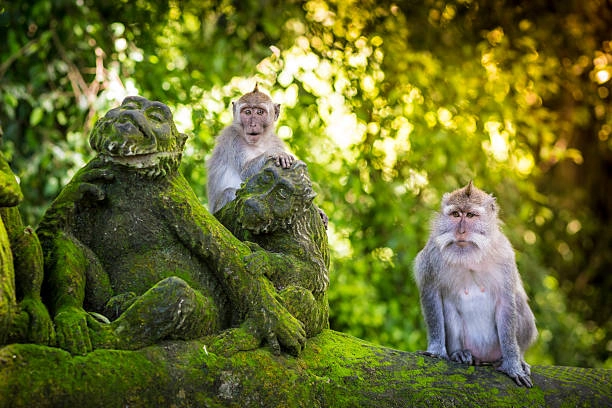
Ubud Monkey Forest is home to three active Hindu temples, each still used for ceremonies by the local community.
These temples are not historical ruins. They are spiritual spaces woven into everyday life. Ritual offerings are placed daily. Ceremonies take place regularly. Visitors are guests within a sacred environment, not spectators.
The forest itself is treated as a living entity. Trees are protected not only for shade or beauty, but because they are believed to house spiritual energy. This belief directly influences how the area is preserved and why development inside the forest is intentionally limited.
For visitors, this means the atmosphere feels calm, grounded, and quietly intentional, especially compared to more commercial attractions in Bali.
The Monkeys of Ubud and Their Natural Behavior
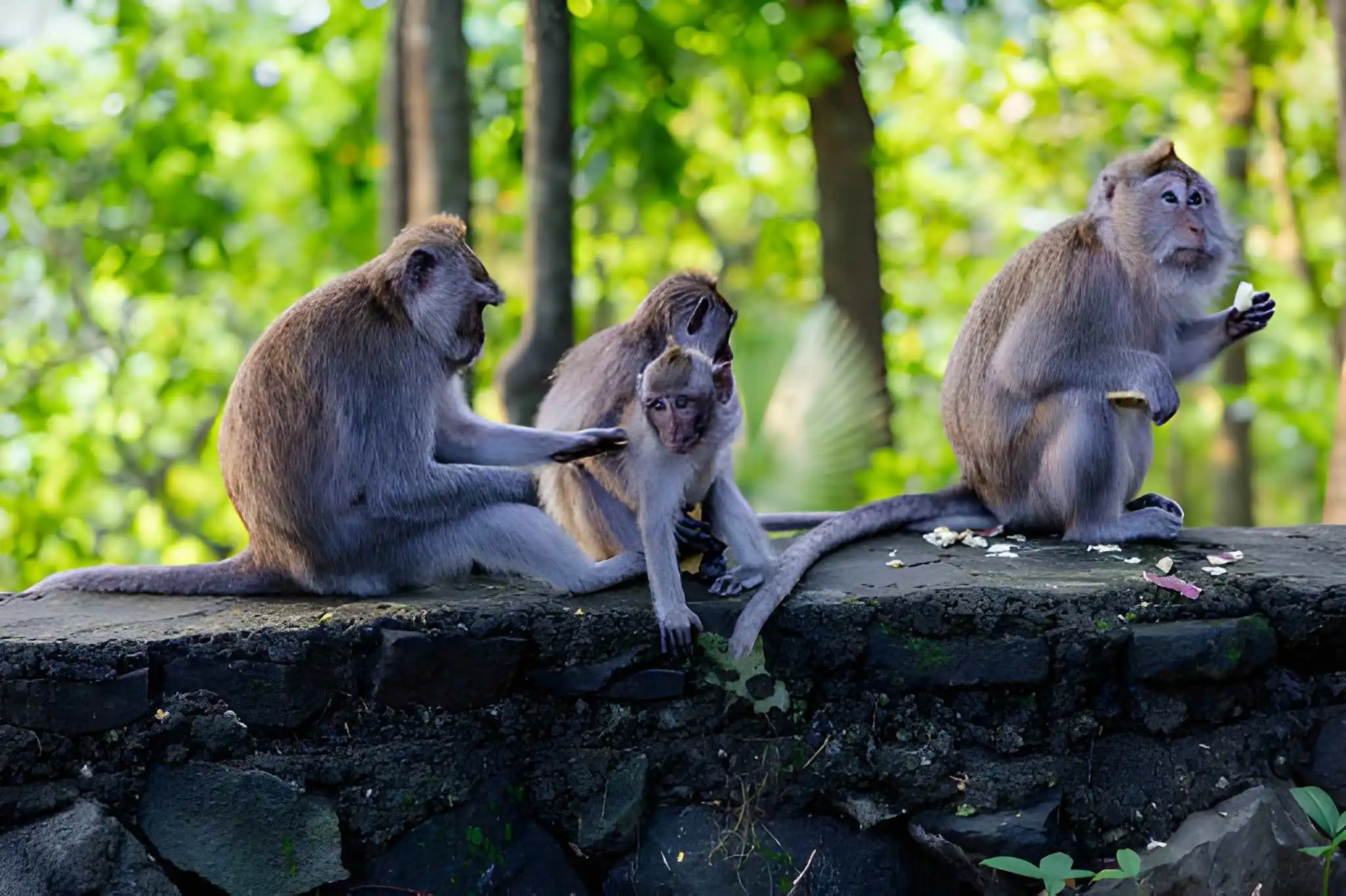
The forest is home to hundreds of long-tailed macaques, living freely in their natural social groups.
These monkeys are not trained, restrained, or staged. They follow their own hierarchy, behaviors, and daily rhythms. You are entering their territory.
This explains several things first-time visitors often find surprising:
- The monkeys move confidently around humans
- They show curiosity rather than fear
- They may approach, observe, or interact without warning
Understanding this dynamic is essential. The monkeys are not aggressive by nature, but they are highly intelligent and socially aware. They recognize hesitation, distraction, and nervous energy.
Seeing them as part of an ecosystem rather than an attraction changes how you relate to them.
What Makes the Experience Feel Different From Other Attractions
Many places in Bali are visually impressive. Ubud Monkey Forest is experientially distinctive.
The difference comes from how little the space demands attention. There are no loud announcements, no forced routes, no performances. Instead, the forest invites slow observation.
As you walk deeper inside, you notice:
- temperature shifts under the tree canopy
- the sound of water from small streams
- the way temples emerge quietly between roots and stone
Moments happen naturally, often without planning. A monkey crossing the path. A brief stillness near a shrine. A feeling of being watched, not in threat, but awareness.
This subtlety is what many visitors remember long after leaving.
Setting the Right Expectations Before You Enter
To experience Ubud Monkey Forest well, expectations matter. This is not a place to rush through for photos. It is not guaranteed entertainment. And it is not entirely predictable.
What you gain depends on how you enter the space.
Visitors who move calmly, observe quietly, and respect boundaries tend to have smoother, more meaningful experiences. Those who arrive distracted or rushed often miss what makes the forest special.
Understanding this before your visit helps you move through the forest with confidence rather than caution.
Understanding Monkey Behavior Inside Ubud Monkey Forest
Before discussing rules, it helps to understand how the monkeys think and behave.
The long-tailed macaques in Ubud Monkey Forest live in structured social groups. Each group has a clear hierarchy, with dominant individuals controlling access to food, space, and safety. These dynamics continue regardless of human presence.
Monkeys observe constantly. They read posture, eye contact, hand movements, and even hesitation. What feels like a small gesture to a visitor can signal confidence, threat, or opportunity to them.
This is why interaction here feels different from wildlife parks. The monkeys are not passive. They are socially alert and responsive.
Understanding this helps explain why certain behaviors are encouraged and others discouraged.
Why Eye Contact, Body Language, and Movement Matter
In monkey social structures, eye contact is a form of communication.
Direct staring can be interpreted as a challenge or threat, especially by dominant individuals. Quick or defensive movements may signal uncertainty, which can invite curiosity or testing behavior.
This does not mean visitors should feel afraid. It simply means that calm, neutral body language creates smoother interactions.
Walking steadily, keeping your hands relaxed, and avoiding sudden gestures helps maintain balance. When visitors move with awareness rather than fear, monkeys tend to lose interest quickly.
This quiet understanding between human and animal is part of what makes the experience feel organic rather than staged.
Why Food Is Strictly Controlled Inside the Forest
Food is the primary source of tension between monkeys and visitors.
Monkeys associate plastic bags, backpacks, and visible items with food. Even if there is nothing edible inside, they may investigate. This behavior is learned over time and reinforced through past experiences.
The forest management strictly controls feeding for two reasons:
- to maintain natural foraging behavior
- to reduce conflict and dependency on humans
When monkeys are fed by visitors, it disrupts social balance and increases competition. This can lead to aggressive behavior within groups, not just toward humans.
By controlling food access, the sanctuary preserves stability inside the ecosystem. Visitors benefit from a calmer, more predictable environment.
The Real Reason Behind Common Visitor Rules
Many rules inside Ubud Monkey Forest are often listed without explanation. Understanding the reasoning behind them helps visitors follow them naturally rather than feeling restricted.
Some of the most important rules include:
- Avoid bringing loose items
Small objects such as sunglasses, hats, or dangling accessories can trigger curiosity. Monkeys may grab them not out of mischief, but instinct. - Do not touch or tease monkeys
Physical interaction disrupts natural boundaries. Even gentle touching can escalate quickly if misunderstood. - Remain calm if approached
Monkeys often investigate briefly and move on. Panic or sudden movement tends to prolong interaction. - Follow designated paths
These paths are designed to minimize interference with monkey group territories and temple spaces.
Each of these rule exists to protect both visitors and monkeys. When followed, the experience feels smooth and surprisingly peaceful.
What Happens If a Monkey Takes Your Belongings
This is one of the most common concerns for visitors.
If a monkey takes an item, it is usually not an act of aggression. It is a learned behavior driven by curiosity or expectation of food exchange.
Forest staff are trained to handle these situations. They understand monkey behavior and use calm, controlled methods to retrieve items when possible.
The most important thing for visitors is not to chase, shout, or react emotionally. Doing so can escalate the situation and draw attention from other monkeys.
Staying composed allows staff to intervene effectively.
Are the Monkeys Dangerous?
The monkeys in Ubud Monkey Forest are wild animals, but serious incidents are rare when visitors respect boundaries. Most negative encounters happen when rules are ignored, food is visible, or behavior is provocative without intention.
The forest is designed to minimize risk through staff presence, controlled feeding, and clear pathways. When visitors move with awareness, the environment feels far less intimidating than many expect.
Understanding risk as something managed rather than avoided entirely helps visitors feel more confident and relaxed during their visit
Photography Inside Ubud Monkey Forest, Capturing Without Disturbing
Photography here works best when it feels secondary.
The forest rewards patience more than positioning. Monkeys move on their own terms, light shifts naturally through the trees, and moments appear when you stop chasing them.
Standing still often produces better images than moving constantly. Letting monkeys approach naturally creates photos that feel alive rather than staged.
Wider shots that include trees, temples, and pathways often communicate the atmosphere better than close ups alone. These images tell a story rather than capturing a subject.
When photography becomes observation first and documentation second, the experience remains intact.
When Is the Best Time to Visit Ubud Monkey Forest
Timing is one of the biggest factors that determines whether your visit feels peaceful or overwhelming.
Ubud Monkey Forest opens in the morning, and the first hours of the day are often the calmest. Monkeys are active but not yet overstimulated by crowds. The pathways feel more spacious, and the forest atmosphere is cooler and quieter.
Late morning to early afternoon tends to be the busiest period. Tour groups arrive, movement becomes more compact, and monkeys are exposed to constant human interaction. While still manageable, this is when the forest feels more energetic and less reflective.
Late afternoon brings a gradual shift. As crowds thin, the forest regains a sense of balance. Light filters through the trees differently, and the pace slows again. Many visitors find this time emotionally rewarding, especially if they enjoy observation rather than photography.
Why Visiting Ubud Monkey Forest Can Be Very Meaningful
Ubud Monkey Forest is not memorable because of the monkeys alone.
What stays with people is the feeling of coexistence. Wildlife is not separated from daily life. Spiritual spaces are not staged for visitors. Nature is not curated to impress. Everything simply exists together, and you are allowed to step into it for a moment.
This is why the experience often feels grounding rather than exciting. It slows your pace without asking you to slow down. It invites awareness instead of attention.
Many travelers leave without fully realizing why the visit felt different. The meaning reveals itself later, sometimes days after, when they reflect on how calm and present they felt inside the forest.
Frequently Asked Questions About Ubud Monkey Forest
Is it safe for first time visitors?
Most visitors spend between one to two hours, depending on pace.
Can children visit?
Yes, but supervision is important, especially with younger children.
Is it worth visiting more than once?
Each visit feels slightly different depending on time of day and season.
Final Thoughts On The Sacred Monkey Forest Ubud
Ubud Monkey Forest is often remembered not for dramatic moments, but for subtle ones. The sound of leaves shifting, the quiet presence of temples, and the feeling of walking through a space where life continues without performance.
At Bali Island Vacations, we believe experiences like this become more meaningful when they fit naturally into your journey. Whether Ubud is your main destination or part of a wider exploration, we help you shape your time with intention rather than urgency.
Because places like Monkey Forest are not meant to be rushed through. They are meant to be felt.