Bali is not just about beaches and landscapes. Throughout the year, the island comes alive with festivals, ceremonies, and cultural events that shape the rhythm of daily life.
If your travel dates align with one of these moments, your experience can feel completely different, from vibrant street parades to deeply spiritual traditions.
For you as a traveler, understanding Bali’s festival calendar is not about filling your schedule, but about knowing when to expect crowds, when to experience something unique, and when to simply enjoy the island at its most authentic.
Here’s a complete guide to Bali festivals in 2026 to help you plan your trip with better timing and insight.
Quick Overview About Bali Festivals In 2026
Bali hosts a wide range of festivals in 2026, from large cultural events to local temple ceremonies. Some festivals are fixed, while others follow the Balinese calendar, which means their exact dates may shift slightly each year.
Here are the key things you should know before planning your trip:
- Bali festivals include cultural, religious, and international events throughout the year
- Many important festivals follow the Balinese calendar and may not fall on the same date annually
- March is marked by Nyepi, the island’s most unique and impactful cultural event
- June to August is the peak festival season, including the Bali Arts Festival
- Some festivals are large and public, while others are local and more intimate
- Festivals can affect traffic, accommodation availability, and overall travel atmosphere
Understanding this overview helps you decide whether you want to travel during a lively cultural period or choose quieter dates for a more relaxed Bali experience.
Bali Festival Calendar 2026 by Month
Bali’s festivals are not evenly distributed throughout the year. Some months are filled with large cultural events, while others offer smaller, more local ceremonies that still give you a glimpse into the island’s traditions.
Here’s how Bali’s festival calendar unfolds in 2026, so you can understand what to expect during your travel dates.
January: New Year Celebrations & Local Cultural Festivals
January in Bali combines a lively holiday atmosphere with smaller, locally rooted cultural events that are often overlooked by most travelers.
Here are the main festivals and cultural moments you can expect in January:
New Year Celebrations (Early January)
The festive energy from New Year’s Eve continues into the first week, especially in Seminyak, Canggu, and Uluwatu. Beach clubs, restaurants, and sunset venues remain active, making this one of the most vibrant periods to experience Bali socially.
Odalan (Temple Anniversary Ceremonies)
Throughout January, many temples celebrate their anniversaries. These ceremonies are deeply spiritual and community-based, offering a glimpse into Bali’s daily religious life if you happen to witness one.
Suwat Water Festival (Selective Dates, Gianyar Area)
In some years, January also features the Suwat Water Festival, a local cultural event centered around water purification rituals and environmental awareness.
While not a large-scale island-wide festival, it offers a more intimate and meaningful cultural experience, especially if you are interested in Balinese spiritual traditions like melukat.
What this means for your trip:
January is less about major scheduled festivals and more about layered experiences.
You can enjoy:
- A vibrant holiday atmosphere (early January)
- A more relaxed travel pace (mid to late January)
- Occasional access to authentic local ceremonies and smaller festivals
February: Lunar New Year & Local Cultural Rhythm
February in Bali is not dominated by major island-wide festivals, but it still offers meaningful cultural moments that reflect the island’s diversity and daily spiritual life.
Here are the key events you can expect:
Lunar New Year (Chinese New Year)
Lunar New Year is celebrated by Chinese Indonesian communities in Bali, particularly in urban areas like Denpasar. Temples become the focal point of activity, decorated with red lanterns and offerings, while families gather for prayers and traditional rituals.
Unlike in countries where Lunar New Year is a large public celebration, in Bali it feels more localized and community-based. As a visitor, you may not see large parades, but you can observe temple visits, cultural decorations, and a quieter form of celebration that adds a different cultural layer to the island.
For your trip, this means minimal disruption. Instead, it becomes an opportunity to witness how Bali blends multiple cultural influences beyond its dominant Hindu traditions.
Odalan (Temple Anniversary Ceremonies)
Odalan ceremonies take place continuously throughout the year, and February is no exception. Each temple celebrates its anniversary based on the Balinese calendar, which means ceremonies happen across different villages on different days.
These ceremonies involve offerings, traditional attire, and community participation. While they are not staged for tourism, respectful visitors may observe from a distance and experience a more authentic side of Balinese spirituality.
For you as a traveler, Odalan is not something you plan around, but something you may encounter naturally. When you do, it often becomes one of the most memorable and genuine cultural experiences during your trip.
March: Nyepi & Ogoh Ogoh (Bali’s Most Defining Cultural Moment)
March is one of the most important months to understand before visiting Bali, as it includes Nyepi, the island’s most unique and impactful cultural event.
Here are the key events:
Ogoh Ogoh Festival (March 18, 2026)
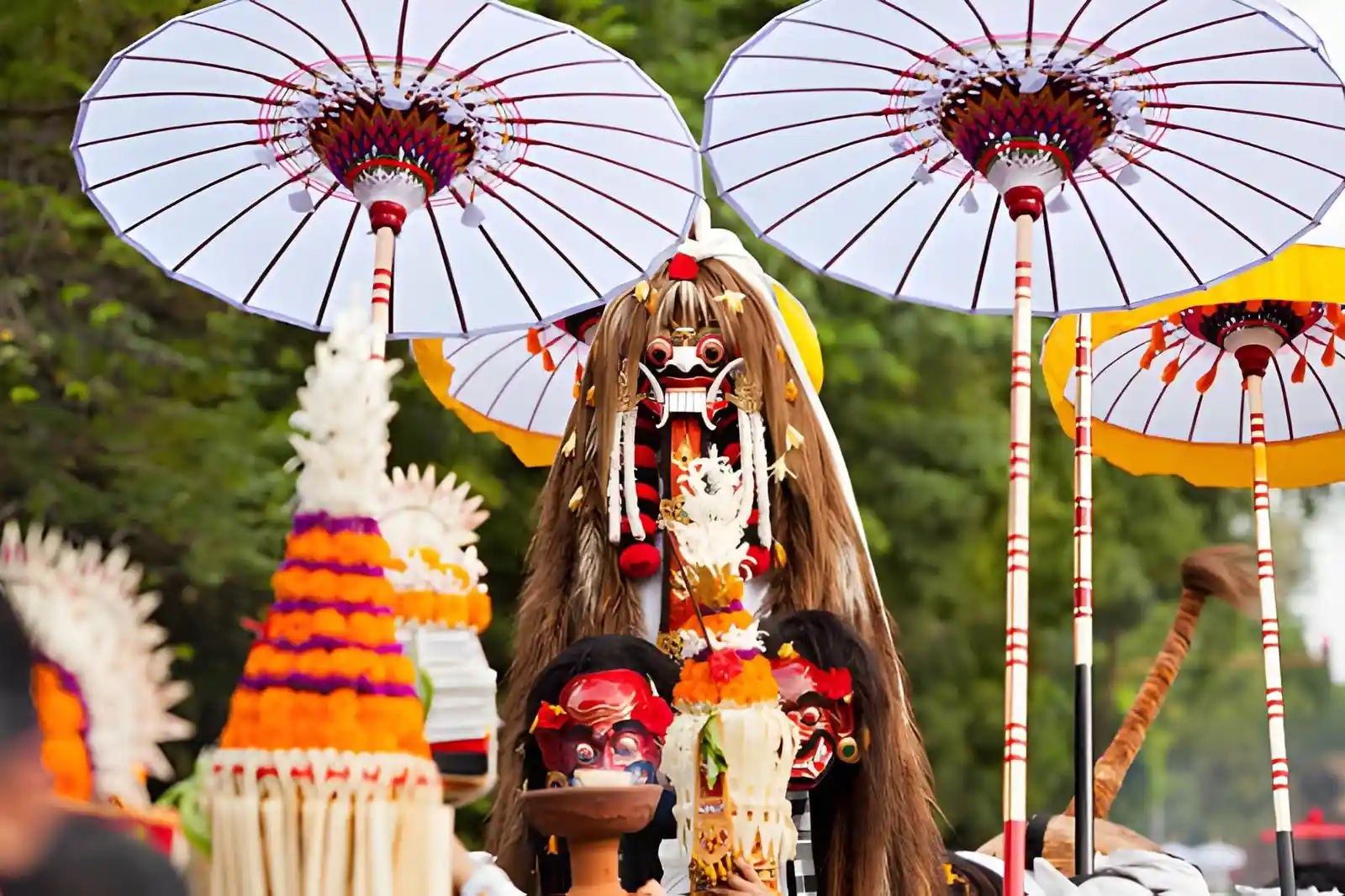
The Ogoh Ogoh parade takes place on the evening before Nyepi, where large handcrafted statues representing negative forces are carried through the streets. These statues are often intricate, expressive, and built by local communities over weeks or months.
The atmosphere is energetic, loud, and sometimes chaotic, with crowds gathering to watch the processions. This is one of the rare moments where Bali feels intense and festive in a very raw and community-driven way.
For visitors, this is a highly visual and memorable experience. However, it also means traffic congestion and busy streets, especially in the evening, so planning your movement and returning to your accommodation early is important.
Nyepi Day (March 19, 2026)
Nyepi marks the Balinese New Year and is observed through complete silence across the island for 24 hours. Unlike typical New Year celebrations, this day is dedicated to reflection, stillness, and spiritual reset.
During Nyepi, all normal activities stop. The airport closes, no vehicles are allowed on the roads, and you are required to stay within your accommodation. Even lighting and noise are kept to a minimum, creating an atmosphere that feels completely different from any other destination in the world.
For your trip, this requires careful planning. You cannot schedule tours, travel between locations, or go during this period. However, if you embrace it, Nyepi can become one of the most unique and meaningful experiences of your entire Bali journey.
If you want to fully prepare, read Nyepi Day Bali 2026: What You Need to Know Before You Visit.
April: Everyday Spiritual Life & Quiet Cultural Encounters
April offers a slower and more grounded experience of Bali, where culture is not presented as an event, but as part of everyday life.
Here are the key cultural elements:
Odalan (Temple Ceremonies Continue)
Temple ceremonies continue across the island, often without large crowds or tourist attention. This makes April one of the best times to observe these rituals in a more natural and uninterrupted setting.
You may see locals carrying offerings, wearing traditional clothing, and gathering at temples throughout the day. These moments are subtle, but they reflect the core of Balinese culture.
For travelers, this creates a more authentic and less commercialized cultural experience, especially if you stay in areas like Ubud or Gianyar.
Daily Offerings and Ritual Practices
Beyond formal ceremonies, April allows you to notice Bali’s daily spiritual practices more clearly. Offerings known as canang sari are placed in front of homes, shops, and temples every day.
With fewer crowds and distractions, these small details become more visible and meaningful. You begin to see that culture in Bali is not limited to festivals, but is part of daily life.
For your trip, this is a great time to slow down, explore at your own pace, and experience Bali beyond the typical tourist highlights.
May: Galungan & Kuningan (Bali at Its Most Cultural and Visual)
May is one of the most culturally rich periods in Bali, especially if Galungan and Kuningan fall within this month based on the Balinese calendar cycle.
Here are the key festivals:
Galungan (Estimated May 2026)
Galungan celebrates the victory of good over evil and is one of the most important religious events in Bali. In the days leading up to it, families prepare offerings and decorate their homes and temples.
One of the most striking visual elements is the presence of penjor, tall bamboo poles decorated with coconut leaves and offerings that line the streets. These create a distinctive and beautiful landscape across the island.
For visitors, this is one of the best times to see Bali in a more traditional and visually rich state, while still being able to explore normally.
Kuningan (10 Days After Galungan)
Kuningan marks the end of the Galungan period and represents blessings, gratitude, and the return of ancestral spirits.
The atmosphere becomes slightly calmer compared to Galungan, but ceremonies continue in temples and homes. It is a more reflective and spiritual closing to the festive period.
For your trip, Kuningan offers a continuation of cultural exposure without the intensity of larger events, making it a comfortable time to explore while still experiencing Balinese traditions.
June: Bali Arts Festival Begins (Cultural Center Stage)
June marks the beginning of one of the most important cultural events in Bali, making it a standout month for travelers who want structured and accessible cultural experiences.
Here are the key events:
Bali Arts Festival (Pesta Kesenian Bali)
The Bali Arts Festival is a month-long cultural event held in Denpasar, typically starting around mid-June. It brings together performers, artists, and communities from across the island to showcase traditional dance, music, crafts, and cultural expressions.
Unlike local temple ceremonies, this festival is designed to be accessible for both locals and visitors. You can attend scheduled performances, explore exhibitions, and experience different aspects of Balinese culture in one central location.
For your trip, this means you don’t have to rely on chance encounters to experience culture. The festival provides a structured way to understand Bali’s artistic heritage, especially if you have limited time.
Opening Parade (Pawai Pembukaan)
The festival usually begins with a large opening parade featuring traditional costumes, music, and performances from different regions of Bali.
This parade is one of the most visually engaging parts of the festival, drawing large crowds and creating a vibrant atmosphere in Denpasar.
For visitors, attending the opening parade requires planning. Traffic can be heavy, and viewing spots fill up quickly. However, if you manage to experience it, it offers a condensed and dynamic introduction to Balinese culture.
July: Cultural Continuation Meets Peak Tourist Season
July is where Bali becomes fully active, combining ongoing cultural festivals with one of the busiest travel periods of the year.
Here are the key events:
Bali Arts Festival (Continuation)
The festival continues throughout July, with daily performances and exhibitions. This allows you more flexibility to attend without needing to align your trip with the opening dates.
Each day offers different performances, so even short visits can give you a varied cultural experience. Compared to June, the rhythm feels more steady and less overwhelming.
For your trip, this means you can combine cultural exploration with other activities, rather than dedicating your entire itinerary to the festival.
Local Temple Festivals (Odalan)
Alongside the main festival, temple ceremonies continue across the island. In July, these often coincide with peak tourist areas, creating interesting contrasts between cultural and commercial spaces.
You might see ceremonies happening near busy streets or popular destinations, offering spontaneous moments of cultural observation.
For travelers, this creates a layered experience where Bali feels both lively and deeply rooted in tradition at the same time.
August: Community Festivals & National Celebration
August introduces a different kind of energy, blending local cultural events with Indonesia’s national identity.
Here are the key events:
Indonesia Independence Day (August 17)
Independence Day is celebrated across Bali with community-based activities such as traditional games, parades, and neighborhood competitions.
Unlike formal festivals, these celebrations are highly interactive and often take place in villages and local communities rather than tourist venues.
For your trip, this offers a chance to see how locals celebrate together. It feels more personal and less curated, especially if you are staying outside major tourist hotspots.
Sanur Village Festival
The Sanur Village Festival is one of Bali’s most well-known community festivals, combining culture, food, environmental awareness, and local creativity.
You’ll find food stalls, art performances, exhibitions, and live entertainment along the Sanur coastline. The atmosphere is relaxed and welcoming, making it accessible for international visitors.
For travelers, this festival is easy to enjoy without needing deep cultural understanding. It provides a casual way to experience local culture while still feeling like a holiday activity.
September: Balanced Travel with Light Cultural Touch
September is often considered one of the most comfortable months to visit Bali, offering a balance between cultural presence and a more relaxed travel environment.
Here are the key cultural elements:
Local Temple Ceremonies (Odalan)
Temple ceremonies continue throughout the month, though without the intensity of larger festival periods.
Because tourist crowds begin to decrease after August, these ceremonies feel more accessible and less crowded.
For travelers, this creates opportunities to observe cultural practices in a calmer setting, without competing with peak season activity.
Regional Cultural Events (Occasional)
Depending on the year and local schedules, smaller festivals and art events may take place in different regions of Bali.
These are not always widely advertised, but they add variety to the cultural landscape during this period.
For your trip, September offers flexibility. You can explore Bali at a slower pace while still encountering cultural moments along the way.
October: Ubud Writers Festival & Cultural-Intellectual Vibe
October brings a different side of Bali, one that is less about traditional ceremonies and more about global ideas, creativity, and storytelling.
Here are the key events:
Ubud Writers & Readers Festival
This is one of Southeast Asia’s most respected literary and cultural festivals, held annually in Ubud. The event gathers international and local writers, journalists, artists, and thinkers for a series of talks, workshops, and panel discussions.
Unlike traditional Balinese festivals, this event is international in tone, with sessions conducted in English and designed for a global audience. Topics range from literature and culture to social issues and creative industries.
For your trip, this transforms Ubud into a more intellectual and inspiring destination. Cafés, venues, and public spaces become hubs for discussion and connection, making it ideal if you enjoy meaningful travel experiences beyond sightseeing.
Cultural Performances Around Ubud
During the festival period, many venues in Ubud also increase their cultural programming, including dance performances, art exhibitions, and live music.
This creates a layered experience where you can attend a literary talk during the day and enjoy traditional performances in the evening.
For travelers, this combination makes October one of the most unique times to visit Ubud, especially if you want both cultural depth and global perspective in one trip.
November: Quiet Season with Authentic Local Rhythm
November is often overlooked, but it offers one of the most relaxed and authentic travel experiences in Bali.
Here are the key cultural elements:
Odalan (Temple Ceremonies Continue)
Temple ceremonies continue across Bali, but without the presence of major festivals or large tourist crowds.
This allows you to observe rituals in a more natural setting, where daily life and spiritual practices feel more visible and less influenced by tourism.
For your trip, this is a chance to experience Bali at a slower pace, where culture is not scheduled, but simply part of everyday life.
Local Cultural Activities (Low-Key Events)
While there are no major island-wide festivals, smaller community events and ceremonies still take place in different regions.
These are often not widely promoted, but they contribute to the island’s continuous cultural rhythm.
For travelers, November is ideal if you prefer quiet exploration, lower prices, and fewer crowds, while still experiencing the essence of Bali.
December: Christmas, New Year & Peak Travel Season
December is one of the most dynamic and high-demand periods in Bali, combining festive celebrations with peak international tourism.
Here are the key events:
Christmas Celebrations
Although Bali is predominantly Hindu, Christmas is widely celebrated in tourist areas, hotels, and resorts. Many venues offer special dinners, themed events, and curated experiences for international visitors.
The atmosphere is festive but more relaxed compared to Western countries. It blends holiday spirit with Bali’s tropical setting, creating a unique end-of-year vibe.
For your trip, this means access to special experiences, but also higher demand for reservations and accommodation.
New Year’s Eve Celebrations
New Year’s Eve in Bali is one of the biggest nights of the year, especially in areas like Seminyak, Canggu, Uluwatu, and Nusa Dua.
Beach clubs, luxury resorts, and restaurants host large-scale events featuring international DJs, live performances, and fireworks. Each area offers a different style, from high-energy parties to more exclusive and curated experiences.
For travelers, this is a high planning requirement moment. Booking early is essential, and traffic can be heavy on the night itself.
Year-End Holiday Peak Season
Beyond specific events, the entire last week of December is considered peak season in Bali.
Tourist arrivals increase significantly, popular attractions become crowded, and prices for accommodation and activities reach their highest levels.
For your trip, this means you need to plan well in advance. However, if you enjoy a lively and festive atmosphere, this is one of the most exciting times to be in Bali.
Travel Tips for Experiencing Bali Festivals in 2026
Understanding Bali festivals is one thing, but knowing how to navigate them as a traveler is what actually shapes your experience. Some festivals enhance your trip, while others can disrupt your plans if you’re not prepared.
Here are practical tips to help you plan smarter and enjoy Bali at the right time for your travel style:
- Always check festival dates before booking your trip
Not all festivals follow fixed dates, especially those based on the Balinese calendar like Nyepi, Galungan, and Kuningan. Checking dates in advance helps you avoid unexpected disruptions or intentionally plan around meaningful cultural moments. - Plan ahead if your trip overlaps with Nyepi
Nyepi is the only day where the entire island shuts down. You cannot go outside, travel, or do activities. Make sure your accommodation is comfortable, prepare food or confirm hotel services, and avoid scheduling flights during this period. - Expect traffic and crowds during major events
Festivals like Ogoh Ogoh, Bali Arts Festival, and New Year’s Eve can significantly affect traffic and accessibility. Roads may close, and popular areas become crowded, especially in the evening. - Book accommodation early during peak festival seasons
If you’re visiting during June–August or late December, demand increases quickly. Booking early not only secures better options but also helps you avoid price spikes. - Choose your location based on your travel goal
If you want cultural immersion, stay in areas like Ubud or Gianyar. If you prefer a social and festive atmosphere, Seminyak, Canggu, or Uluwatu are more suitable. - Respect local customs during ceremonies
If you encounter temple ceremonies, dress modestly, avoid interrupting rituals, and observe respectfully. These are sacred events, not performances. - Use festivals as part of your experience, not your entire plan
Festivals should enhance your trip, not limit it. Balance your itinerary between cultural events, nature, and relaxation to get a complete Bali experience.
Plan Your Bali Trip Smarter Around Festivals and Experiences
Bali is not a destination you visit just once in one way. The island changes depending on when you arrive, what festivals are happening, and how you choose to experience it.
By understanding Bali’s festival calendar, you’re not just avoiding crowds or disruptions, you’re unlocking a deeper layer of the island that many travelers miss. From the silence of Nyepi to the vibrant energy of cultural festivals, each moment offers a different perspective of Bali.
If you want a smoother, more personalized, and well-planned journey, Bali Island Vacations can help you design an itinerary that aligns with your travel style, preferred timing, and must-see experiences. Whether you want cultural immersion, scenic exploration, or a balanced holiday, planning it right makes all the difference.
Frequently Asked Questions About Bali Festivals 2026
When is the best time to visit Bali for festivals in 2026?
The best time is between June and August for large cultural events like the Bali Arts Festival, or March if you want to experience Nyepi.
Should I avoid Bali during Nyepi Day?
Not necessarily. If you are prepared to stay indoors for 24 hours, Nyepi can be a unique and memorable experience.
Are Bali festivals tourist-friendly?
Yes, major festivals like the Bali Arts Festival and Sanur Village Festival are accessible to visitors, while temple ceremonies should be observed respectfully.
Do Bali festivals affect travel plans?
Some do. Nyepi completely stops movement, while others may cause traffic, crowds, or limited access in certain areas.
Can I attend temple ceremonies as a tourist?
Yes, but only as an observer. You should dress appropriately and respect local customs.
Are festival dates fixed every year?
Not all. Many festivals follow the Balinese calendar, so dates like Nyepi, Galungan, and Kuningan change each year.
If you want to explore more practical insights and plan your trip in detail, you can continue with our Bali travel guides below.
- Bali Travel Guide 2026: Best Time, Costs, Places & Tips for First-Time Visitors
- Bali Public Holidays 2026: Full Dates, Nyepi Guide & Travel Tips
- Best Bali Vacation Ideas for 2026: Places, Experiences, and Things to Do
- Bali Travel Trends in 2026: What Is Changing and What It Means for You
- Summer Holidays in Bali: Best Places, Weather, Things to Do & Travel Tips