Tegenungan Waterfall is one of the most accessible waterfalls in Bali, and that accessibility shapes the experience more than anything else. You are not trekking through remote jungle or committing a full day to get here. Instead, Tegenungan fits naturally into a half day plan, especially if you are staying around Ubud or South Bali.
What often surprises first time visitors is how close this waterfall feels to everyday Balinese life. It sits near villages, roads, and cafés, yet once you reach the base, the sound of falling water takes over and the surroundings feel distinctly separate from traffic and crowds above.
If you are considering whether Tegenungan is worth adding to your itinerary, it helps to understand exactly where it is, how to get there, and what kind of visit to expect. Here is how it works on the ground.
Where Tegenungan Waterfall Is and How to Get There
Tegenungan Waterfall is located in Kemenuh Village, Gianyar Regency, just southeast of Ubud. Its position makes it one of the easiest waterfalls to visit without long travel times.
From common base areas:
- Ubud: around 20 to 25 minutes by car
- Sanur: around 40 minutes
- Seminyak or Canggu: roughly 60 to 75 minutes depending on traffic
The most practical way to visit is by private car or scooter. Roads leading to the parking area are paved and straightforward, though the final approach can feel busy during peak hours. Parking is available close to the entrance, which means there is no long walk before you begin the descent toward the waterfall.
Once parked, access to the waterfall is entirely on foot via a stair path leading down to the river level. The walk is short, but it is steep in sections, so knowing this upfront helps you plan footwear and timing more comfortably.
What Tegenungan Waterfall Actually Looks Like
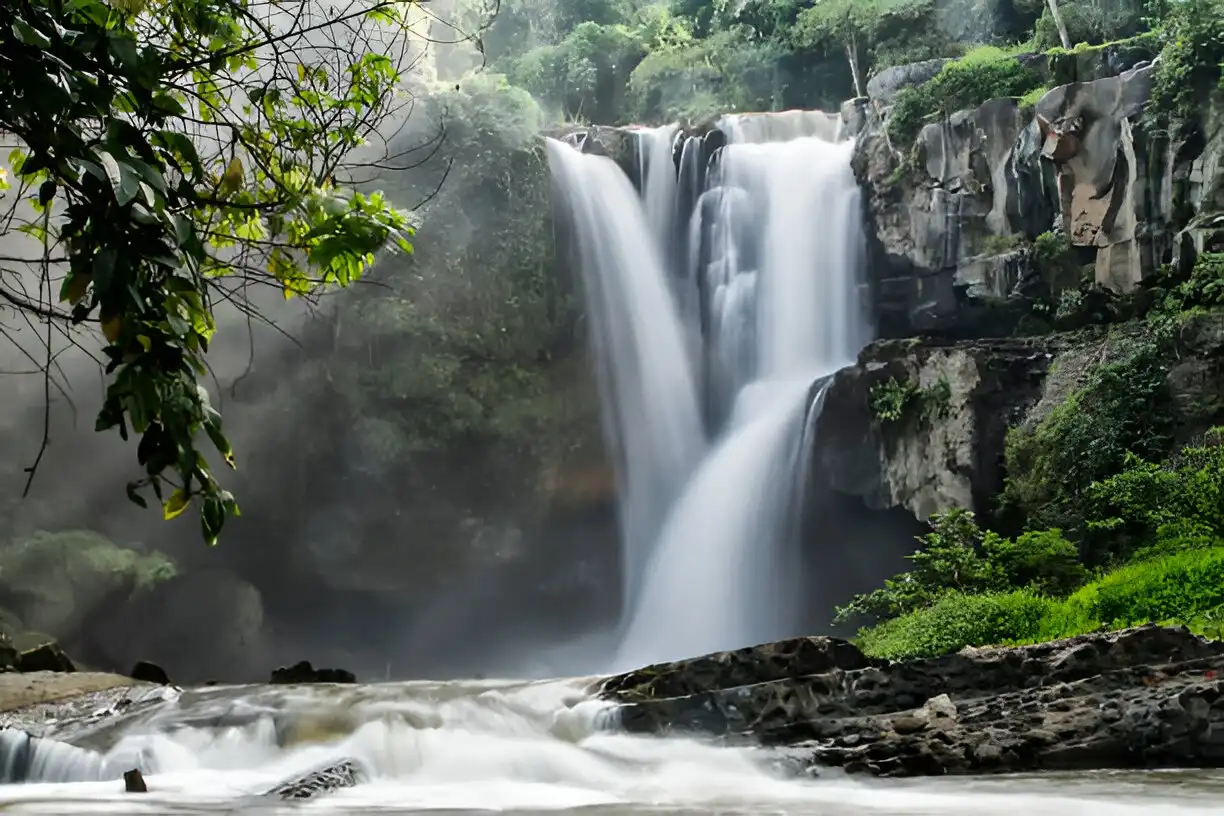
Tegenungan is a single drop waterfall with a wide, open plunge pool at its base. The water falls straight down from a rocky cliff, creating a constant spray that you feel before you fully see it. The surrounding walls are green and dense, especially after rain, but the setting feels open rather than enclosed.
The character of the waterfall changes noticeably with the season. During the rainy months, the flow is powerful and the sound is deep and steady. In the dry season, the water volume softens, revealing more of the rock face and making the pool calmer and clearer. Neither version feels staged. What you see depends entirely on recent weather.
Unlike waterfalls tucked deep in forest valleys, Tegenungan feels grounded and physical. You hear the water from above, feel the humidity as you descend, and arrive at a space where sound, movement, and scale take over at once.
The Experience When You Arrive at the Waterfall
The moment you arrive, the experience becomes more sensory and grounded. Here’s how it unfolds at the waterfall.
The Walk Down from the Entrance
From the ticket gate, a stair path leads down toward the river. The descent takes only a few minutes, but the steps can be uneven and damp, especially after rain. Handrails are available in most sections, and pauses along the way give you partial views of the falls before you reach the base.
This short walk is enough to shift the atmosphere. Traffic noise fades quickly, replaced by water and echoes from the cliff walls.
Standing at the Base
At the bottom, the space opens up. The plunge pool stretches across the riverbed, with large rocks along the edges where people naturally pause. The waterfall dominates the scene, and the sound makes conversation secondary.
You will notice that people spread out rather than cluster in one spot. Some stay close to the rocks, others move toward the center of the pool, and many simply stand still to take it in. Even on busy days, the space absorbs movement better than you might expect.
Swimming Conditions
Swimming is possible when water levels are moderate. The pool deepens gradually, but the current near the base can be strong when flow is high. Most people stay in shallower areas or move slowly toward the center.
A few things to keep in mind:
- The rocks can be slippery underfoot
- Water temperature stays cool year round
- Strong flow days are better for viewing than swimming
Knowing this helps you decide whether to bring swimwear or simply enjoy the scene from the edges.
Best Time to Visit Tegenungan Waterfall
Tegenungan can be visited year round, but the experience changes significantly depending on time of day, season, and crowd flow. Choosing the right window makes a noticeable difference.
Early morning is the calmest time to visit. Arriving shortly after opening allows you to experience the waterfall before tour groups and midday heat arrive. The light is softer, the air feels cooler, and the space feels more grounded.
Midday tends to be the busiest period. Tour buses, independent drivers, and visitors combining Tegenungan with nearby attractions often overlap at this time. The waterfall remains impressive, but the atmosphere becomes more social and less reflective.
Late afternoon brings a slight shift. Crowds thin gradually, and the light becomes warmer, especially during the dry season. This can be a comfortable option if mornings are not possible, though water levels may vary depending on recent rainfall.
Seasonally:
- Rainy season: stronger flow and a more dramatic soundscape
- Dry season: calmer water and clearer visibility, better for swimming
Weekdays are generally easier than weekends, especially outside school holiday periods.
Entrance Fee, Opening Hours, and What to Prepare
Tegenungan Waterfall operates as a managed site, which means access is straightforward and facilities are available on site.
Entrance fee is usually collected at the gate and may vary slightly over time. It is best to carry small cash for convenience.
Opening hours typically start in the morning and continue until late afternoon. Arriving earlier in the day gives you more flexibility and a quieter experience.
What to prepare before you go:
- Comfortable footwear with good grip
- Light clothing suitable for humidity
- Swimwear if you plan to enter the water
- A small towel and change of clothes
- Drinking water and sun protection
Facilities near the entrance usually include restrooms and simple changing areas. Lockers may be limited, so avoid bringing valuables you do not need at the base of the waterfall.
Practical Tips to Enjoy Tegenungan Waterfall Comfortably
Tegenungan is one of the most accessible waterfalls in Bali, but comfort still depends on how you prepare. The walk down is straightforward, yet the environment changes quickly once you get closer to the water. Humidity, mist, and wet stone are all part of the experience.
What usually makes the visit feel smooth is not rushing and keeping things light. You are not hiking deep into the jungle here, so you do not need full trekking gear, but a few smart choices make a big difference once you reach the base.
To stay comfortable throughout your visit, keep these in mind:
- Wear footwear with decent grip, as the steps and rocks can stay damp even on sunny days
- Bring a small backpack rather than a bulky day bag so you can move easily near the water
- Use a dry pouch for your phone or camera if you plan to get close to the falls
- Check the water flow before swimming, and stay near calmer edges when the current feels strong
Safety Notes You Should Not Ignore
Tegenungan looks inviting, but it is still shaped by natural water flow and slippery rock surfaces. Conditions can change, especially after rain, even if the weather feels clear when you arrive.
Most safety issues happen when visitors underestimate how strong the water can be or step outside designated paths for photos. Taking your time and staying aware of your surroundings keeps the experience relaxed rather than stressful.
For a safer visit, it helps to:
- Avoid standing directly under the strongest flow, particularly during the rainy season
- Stay on marked paths and platforms instead of climbing wet rocks
- Take short breaks on the stairs if you are visiting with children or older family members
- Be mindful of changing water levels if rain has fallen upstream earlier in the day
How to Avoid Crowds Without Changing Your Itinerary
You do not need to restructure your entire Bali plan to experience Tegenungan with fewer people. Small timing and movement choices already shift the atmosphere significantly.
Crowds tend to concentrate near viewing platforms and photo spots close to the entrance. Spending more time near the river level, where people usually move through more quickly, often feels calmer and less rushed.
To enjoy a quieter visit without extra effort:
- Arrive early in the morning or later in the afternoon when tour traffic slows down
- Stay longer at the base of the waterfall instead of lingering near the upper viewpoints
- Combine Tegenungan with nearby low key spots rather than popular midday attractions
- Allow flexibility in your schedule so you are not pressured to rush through
What Else to Do Nearby
Tegenungan works best when you see it as part of a wider Gianyar and Ubud flow, not a single stop you rush through. Within a short drive, you can slow the pace and layer your day with experiences that feel more grounded and less forced.
Here are a few nearby ideas you can naturally combine with your visit:
- Tegenungan River Trekking for a light walk along the riverbanks and village edges just beyond the main waterfall area
- Tegenungan viewpoint terraces if you want a quieter perspective from above without committing to a long stay
- Monkey Forest Ubud for a contrast between open water scenery and shaded forest paths
- Tegallalang Rice Terraces when you want classic Bali landscapes paired with flexible walking routes
- Local craft shops around Gianyar for handmade woodwork, textiles, and small artisan studios
- Local markets where daily life continues without being shaped around tour schedules
So, Is Tegenungan Waterfall Worth Visiting?
Yes. Tegenungan Waterfall is worth visiting if you want an easy, impressive waterfall that fits naturally into a Ubud or Gianyar day.
It is not hidden and it can get busy, but the waterfall itself is powerful, scenic, and accessible without long trekking. That makes it a solid stop if you want a real waterfall experience without overplanning.
Plan Your Tegenungan Waterfall Visit the Right Way
Tegenungan Waterfall works best when it is part of a well-planned Bali day, not a rushed stop between crowded attractions. With the right timing and route, you get the scenery, the experience, and the breathing space that make it worth visiting.
If you want to visit Tegenungan without stressing about directions, timing, or traffic flow, Bali Island Vacation helps you plan your day around how Bali actually moves. From waterfall stops to village routes and nearby highlights, everything is arranged to feel smooth, realistic, and enjoyable.
If you want to see how Tegenungan fits into a wider Bali experience, explore other destinations across the island in the guides below.