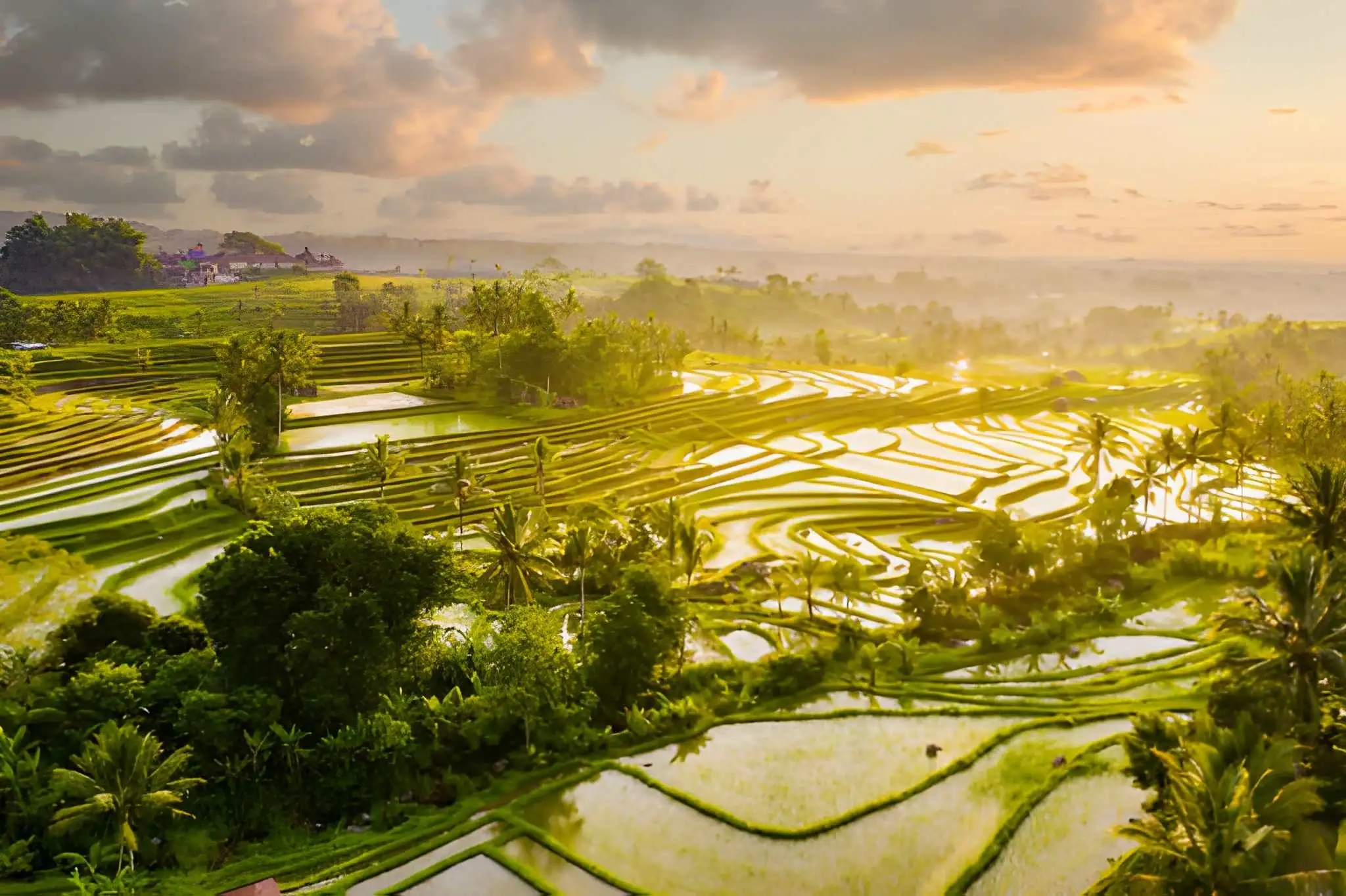
If Bali’s rice terraces often appear as a quick photo stop, Jatiluwih exists on a completely different rhythm.
This is not a place you rush through or glance at from the roadside. Jatiluwih is expansive, quiet, and deliberately slow. The landscape unfolds over wide valleys, gentle slopes, and long walking paths where rice fields stretch far beyond a single viewpoint. You do not just see the terraces here. You move through them.
Many travelers hear about Jatiluwih because it is a UNESCO World Heritage Site. But what makes it memorable is not the title. It is the feeling of space, continuity, and balance that still defines daily life in this part of Bali. Farmers work the land as they always have. Water flows through ancient irrigation channels. The scenery feels lived in, not staged.
This guide is written to help you understand what Jatiluwih truly is, how it differs from other rice terraces in Bali, and how to experience it in a way that feels natural rather than rushed.
What Are Jatiluwih Rice Terraces
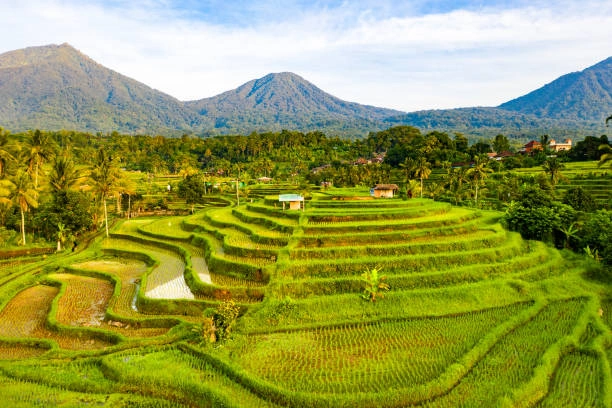
Jatiluwih Rice Terraces are located on the slopes of Mount Batukaru in western Bali, within a highland farming region that has remained largely unchanged for centuries. Unlike smaller or more compact rice terrace areas, Jatiluwih covers a vast landscape of active agricultural land that continues to function as part of local village life.
The terraces are shaped by the subak irrigation system, a traditional water management method developed by Balinese farmers over a thousand years ago. Subak is not just about farming technique. It is a cooperative system rooted in shared responsibility, spiritual belief, and balance between people, nature, and water.
This living system is the reason Jatiluwih was recognized by UNESCO. Not because it is visually impressive, but because it represents a cultural philosophy that is still practiced every day. Water flows from mountain springs through temples, canals, and fields, ensuring that farmers receive irrigation fairly and sustainably.
At Jatiluwih, you are not visiting a preserved monument. You are stepping into a working landscape. The rice fields you see are planted, harvested, and maintained as part of an ongoing cycle. This is why the experience feels grounded and authentic. Nothing here is built solely for visitors.
Jatiluwih matters because it shows how deeply Bali’s landscape is connected to its values. The terraces are not separated from culture, spirituality, or daily life. They are the result of all three working together.
Where Is Jatiluwih Rice Terraces Located
Jatiluwih Rice Terraces are located in Tabanan Regency, in the western highlands of Bali, on the slopes of Mount Batukaru.
Geographically, this area sits far from Bali’s busy coastal regions and even farther from Ubud’s tourist core. That distance is exactly why Jatiluwih feels so different. There are no dense shop rows, no compact viewpoints squeezed between cafes, and no sense of being rushed through a single photo stop.
The village itself is surrounded by forested hills, small farming communities, and open agricultural land. Roads wind gently upward, and as you approach Jatiluwih, the landscape gradually shifts from towns to wide valleys and layered fields.
Because of its location, Jatiluwih is not something you casually “drop by.” It is a destination you choose intentionally, usually as part of a slower countryside route rather than a packed sightseeing day.
How to Get to Jatiluwih Rice Terraces
Reaching Jatiluwih requires more planning than rice terraces closer to Ubud, but the journey is part of the experience.
1. Distance and Travel Time
From Ubud, the drive takes approximately 1.5 to 2 hours, depending on traffic and route. From Seminyak, Canggu, or southern Bali, expect closer to 2 to 2.5 hours.
The roads are generally in good condition, but they become narrower and quieter as you move deeper into the highlands. This transition is noticeable and helps set the pace before you even arrive.
2. Getting There by Scooter
Traveling by scooter is possible for confident riders, especially those used to longer rides in Bali. The route involves uphill sections, curves, and changing weather conditions due to elevation.
A scooter ride suits travelers who:
- Enjoy scenic drives and cooler air
- Are comfortable navigating rural roads
- Do not feel rushed by time constraints
However, for many visitors, the distance can feel tiring, especially after already spending days riding around Ubud or the south.
3. Visiting with a Private Driver
Most travelers choose to visit Jatiluwih with a private driver, and for good reason.
This option allows you to:
- Travel comfortably over a long distance
- Stop at viewpoints or villages along the way
- Focus on walking and exploring once you arrive, not on the drive back
Jatiluwih is often combined with other western Bali highlights, such as mountain temples or lakes, creating a full countryside day that feels balanced rather than exhausting.
For travelers who value pace, flexibility, and a more relaxed experience, this is the most practical way to visit.
Entrance Fees, Tickets, and Practical Information
Unlike smaller rice terrace areas, Jatiluwih has an official entrance system that is clearly managed and well organized. This helps maintain the landscape, walking paths, and irrigation channels across a very large area.
Entrance Fees
As of current conditions, entrance fees for Jatiluwih Rice Terraces are:
- International Visitors: IDR 75,000 per person
- Domestic Visitors: IDR 40,000 per person
This ticket gives you access to:
- The main rice terrace landscape
- Designated walking trails across different sections
- Viewpoints spread throughout the area
There are no hidden entry points or repeated donation stops once you are inside. One ticket covers the entire visit.
Parking Fees
If you arrive with your own vehicle, parking fees are paid separately:
- Scooters: IDR 2,000
- Cars: IDR 5,000
Parking areas are spacious and located near the main entrance and several access points around the terraces.
Facilities On Site
Because Jatiluwih covers a wide area, facilities are spread out rather than concentrated in one place. You will find:
- Restrooms near main entrances and restaurants
- Small local eateries along walking routes
- Viewing shelters and rest spots at key points
This setup keeps the area functional without turning it into a dense tourist complex.
Opening Hours and Best Time to Visit Jatiluwih Rice Terraces
Jatiluwih Rice Terraces are generally open daily from: 8:00 AM to 6:00 PM
Because of its size and open layout, your experience here depends far more on timing than on official hours.
Best Time of Day to Visit
- Early Morning (8:00–10:00 AM)
This is the most rewarding time to explore Jatiluwih. The air is cool, mist often hangs lightly over the fields, and the terraces feel expansive and quiet. Farmers begin their work, and the walking paths are peaceful. - Late Afternoon (3:30–5:30 PM)
The light softens, shadows stretch across the terraces, and the landscape takes on warmer tones. Temperatures drop, making longer walks more comfortable. This time suits travelers who want atmosphere rather than bright midday colors.
When to Avoid
Late morning to early afternoon can feel warm and exposed. While Jatiluwih never feels crowded in the way smaller terraces do, walking under strong sun across open fields can be tiring.
Best Season to Visit
- Dry Season (May–October)
This is the most comfortable period to visit. Paths are dry, visibility is clear, and walking long routes feels easier. This season suits travelers who want to explore multiple trails without weather interruptions. - Rainy Season (November–April)
The terraces become lush and deeply green. Rain usually comes in short bursts rather than all day, but paths can be slippery. This season is ideal if you prioritize scenery over ease of walking.
Special note:
Visiting around Balinese ceremonial periods can add subtle cultural atmosphere, such as decorated temples and farmers in traditional attire, without turning the area into a festival crowd.
What You Can Do at Jatiluwih Rice Terraces
Jatiluwih is built for movement, distance, and time. The experience unfolds as you walk, not as you stand at one viewpoint. This is what makes it very different from more compact rice terrace areas.
Below are the main ways travelers experience Jatiluwih, explained realistically so you know exactly what you are signing up for.
1. Walking Through the Rice Fields
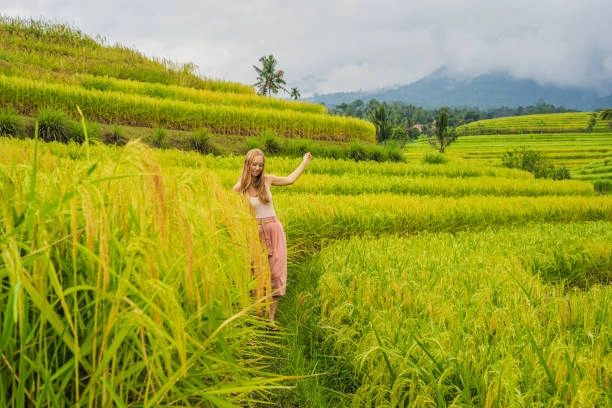
Walking is the heart of Jatiluwih.
Once you step onto the trails, the scale of the landscape becomes clear. The terraces stretch far beyond what you see from the entrance, following natural contours rather than dramatic vertical drops. The paths move gently across hills, along irrigation channels, and between wide rice paddies that are still actively farmed.
Walking routes vary in length, from short loops near the entrance to longer trails that can take one to two hours. You can choose how deep you want to go without committing to a fixed route.
What the walk feels like:
- Mostly flat to gently sloping terrain
- Wide dirt and stone paths, not narrow ridges
- Open exposure with minimal shade in many sections
- Constant visual openness rather than dramatic viewpoints
This experience suits you if:
- You enjoy slow, steady walks in nature
- You want space, silence, and uninterrupted views
- You prefer observing daily agricultural life rather than posing for photos
It may feel less ideal if:
- You are short on time
- You expect compact, high-impact scenery
- You struggle with long walks under open sun
Jatiluwih rewards patience. The longer you walk, the more the landscape starts to feel immersive rather than scenic.
2. Photography and Scenic Viewpoints
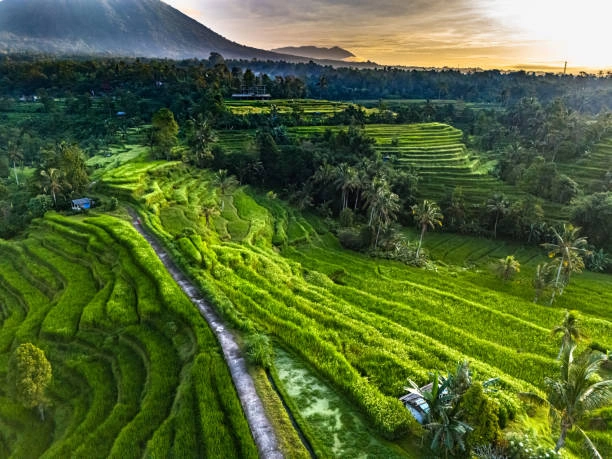
Photography in Jatiluwih works differently than in smaller rice terrace areas.
Instead of one iconic angle, Jatiluwih offers endless variations of similar beauty. The appeal comes from repetition, depth, and scale rather than a single dramatic frame.
There are two main photography approaches here.
a. Viewpoints and Roadside Stops
Several elevated spots near the entrance and along internal roads offer wide panoramic views. These are ideal for capturing the vastness of the terraces, especially in morning light when mist lingers above the fields.
b. Photography Along Walking Trails
Inside the terraces, photography becomes more intimate. Instead of grand views, you capture:
- Long irrigation lines cutting through fields
- Farmers working against a massive green backdrop
- Subtle changes in light as clouds move overhead
Realistic photography tips:
- Early morning gives softer contrast and calmer tones
- Overcast conditions actually work well here
- Wide-angle lenses capture scale better than zoom
- Simple compositions feel more honest than staged shots
Jatiluwih is not about dramatic poses or props. Its strength lies in quiet, grounded visuals that feel expansive rather than curated.
3. Cycling Through Jatiluwih
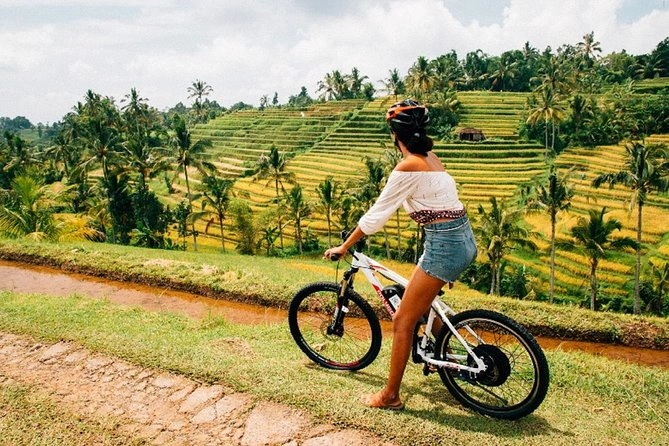
For travelers who want to cover more ground, cycling is another way to experience the area.
The internal roads and paths are long, gently rolling, and scenic. Cycling allows you to move between different sections without rushing, while still feeling connected to the landscape.
This experience suits:
- Travelers comfortable cycling on uneven rural roads
- Those who want movement without long walking times
- Visitors combining Jatiluwih with nearby villages
Cycling here is not extreme or technical. It is slow, scenic, and best enjoyed without a tight schedule.
4. Cafes and Restaurants with Rice Field Views
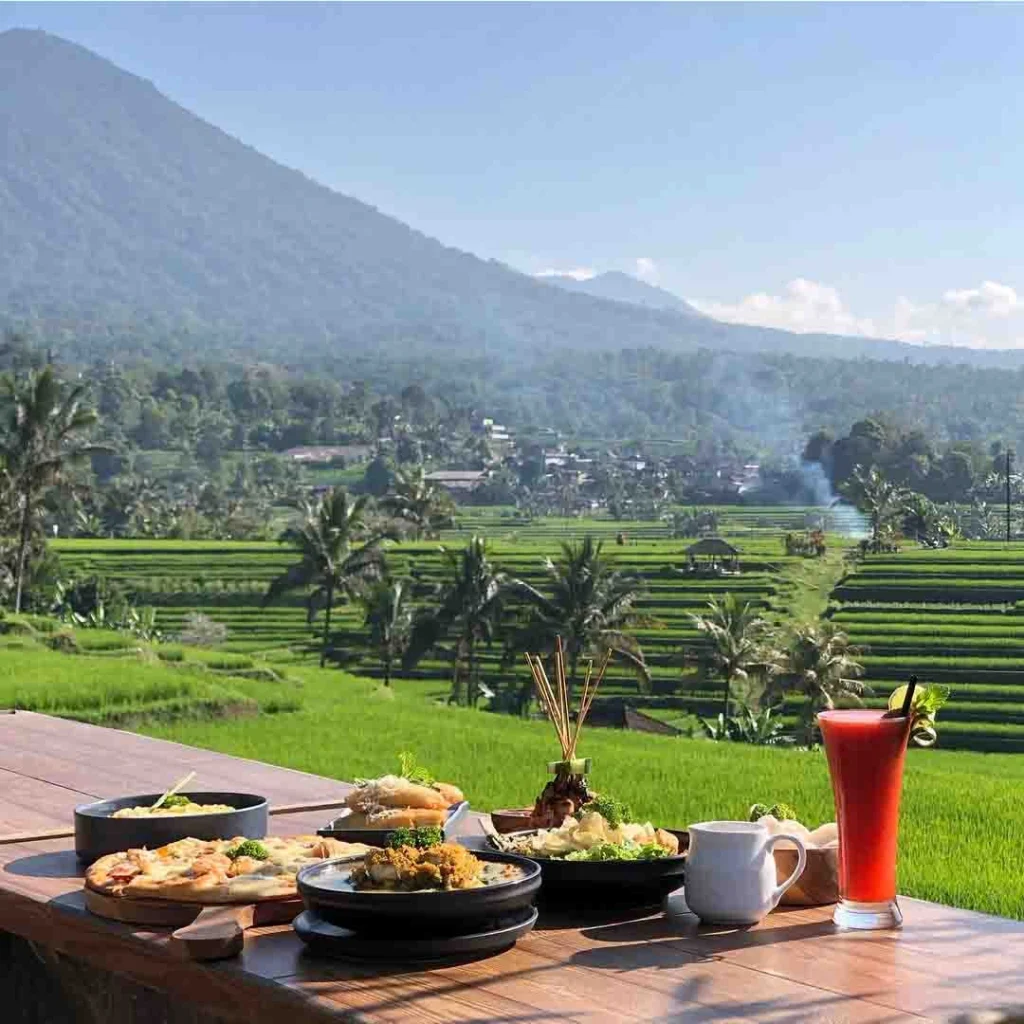
Jatiluwih also offers several local restaurants and cafés overlooking the terraces. These are spread out, not concentrated in one tourist strip.
People stop here not for culinary highlights, but for:
- Rest after walking
- Shade during midday heat
- Long, uninterrupted views across the fields
The best time to sit:
- Late morning if you arrive early and need a break
- Mid to late afternoon when light softens and temperatures drop
Menus are simple and prices are reasonable for the setting. Think of these places as viewpoints with seating, not destinations on their own.
If you are interested in experiencing different styles of rice terraces around Bali, Jatiluwih is just one part of a much broader landscape tradition. Explore Bali’s rice terrace experiences further through these guides:
- 7 Most Beautiful Rice Terraces Around Ubud You Should Not Miss
- Tegalalang Rice Terraces: What to Expect, When to Visit, and How to Experience It Right
Experiencing Jatiluwih the Way It’s Meant to Be
Jatiluwih is best experienced without rushing. The terraces are wide, the paths are long, and the atmosphere rewards those who slow down and move with intention.
When you give it proper time, Jatiluwih feels less like a viewpoint and more like a living landscape shaped by water, tradition, and daily life. This is not a place to tick off quickly, but one to absorb quietly.
At Bali Island Vacations, we design private, well-paced journeys that let places like Jatiluwih be experienced naturally, without tight schedules or unnecessary detours. Just space, timing, and a rhythm that fits the landscape.
Because in Jatiluwih, how you travel matters as much as where you go.